Three Layers of Color Energy: How Hues Steer Focus, Body Memory and Mood This October
By RedKnotr Editorial - 11/10/2026 - 0 comments
Ask someone why they painted a room blue and they will say it feels calm. Ask why a red scarf feels bold and you will get a shrug. Color energy is the discipline of taking that shrug seriously: the observation that hues do consistent, layered work on human experience - and that you can use that work deliberately rather than by accident.
Layer One: Color Steers the Eye
The first mechanism is the simplest and the most provable: color directs visual focus. Bright, saturated, warm hues pull attention forward; muted, cool, dark hues let it rest. Designers exploit this daily, and so can you - a single warm object on a neutral desk becomes a natural point of return for a wandering mind, while a wall of stimulation (notifications, clutter, clashing prints) keeps the eye - and with it the thoughts - in permanent transit.
Practical translation: if you want a corner of your home to be where you breathe, dress it in the cool, low-contrast end of the wheel. If you want a corner where you start things, give it one confident warm anchor.
Layer Two: Color Reaches the Body
The second layer is bodily. Tradition holds - and everyday experience agrees - that warm hues feel heavier, closer and drier, while cool hues feel lighter, more distant and moist. These are not optical facts but sensory associations, and they arrive faster than thought.
- Reds and oranges: many people report a genuine lift in alertness; useful for mornings and sluggish afternoons, overwhelming at bedtime.
- Blues and greens: associated with slowed breathing and lowered shoulders; the palette of wind-down hours.
- Yellows: bright attention without heat - a middle path for workspaces.
- Deep purples and navy: many find them settling for evening reflection, the visual equivalent of a lowered voice.
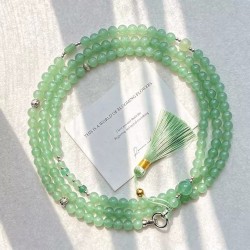
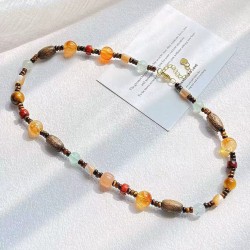
Wearing color works on the same channel. A piece worn at the collarbone or wrist sits at the edge of vision all day; choosing its color deliberately means choosing a sensory tone you will replay to yourself for hours. That is the quiet logic behind color-matched stones and metals in our jewelry collections - the hue is not decoration but dosage.
Layer Three: Color Carries Memory and Culture
The third layer is the deepest: cultural and personal memory. Green means renewal to nearly everyone, but it also means the specific green of your grandmother's kitchen tiles. White reads as purity in one tradition and mourning in another. Gold speaks of celebration in some histories and restraint in others. This layer is why no color dictionary is universal - your associations are part of the mechanism, not a malfunction of it.
The practical consequence: audit your own palette history. Which colors belonged to the rooms where you felt safe? Which to the waiting rooms where you did not? Many people find that deliberately re-introducing a "safe" color into daily wear does more for mood than any generic rule.
A Seven-Day Color Rhythm Experiment
- Day 1 - Observe. Photograph your desk and your outfit. Note the dominant hues and how the day felt.
- Day 2 - Cool the evening. Add one blue or green element to your wind-down space.
- Day 3 - Warm the start. One warm anchor - mug, scarf, notebook - at your morning seat.
- Day 4 - Wear an intention. Choose one color for one stated purpose (focus, calm, courage).
- Day 5 - Retire one color. Notice what a hue you dislike is doing in your field of view.
- Day 6 - Natural light. Spend twenty minutes with plants or daylight spectrum; compare.
- Day 7 - Review. Which change would you keep? Keep exactly that one.
FAQ
Is color energy the same as color psychology?
Color psychology is the research tradition; color energy is the broader practice that also includes symbolic, elemental and ritual correspondences. They overlap heavily on the first two layers.
Do chakra colors fit into this system?
Yes - chakra tradition offers one correspondence map (red at the base through violet at the crown) that many practitioners use as a starting grid for choosing hues by intention.
Can a color affect me even if I don't believe any of this?
The first two layers do not require belief - attention capture and sensory association are ordinary perception. The third layer works whether or not you narrate it.
Which single color suits everyone?
None. That is the point: your memory layer personalizes every hue. Start from your own history, not a chart.
Tags: color energy, color psychology, mood regulation, chakra colors
✧ Go deeper ✧
Explore more, shop the crystal, dive into the topic
Explore more articles
View all articles →- Ten Colours, One Autumn: Reading the AW 2026/27 Mood Map from Muted Clay to Butter Yellow 18/10/2026
- The Cocoon Effect: What Colour Drenching Reveals About Single-Hue Calm This October 2026 17/10/2026
- Your Season, Not the Shelf: A Five-Minute Guide to Seasonal Colour Analysis and Everyday Colour Energy (October 2026) 17/10/2026
- Wearing the Season: Autumn 2026's Palette as a Daily Colour-Energy Practice 16/10/2026

This content is copyrighted by its original authors. In case of any infringement, please contact us for removal.
Comments
Write a comment