The Center Stone Method: Building a One-Purpose Crystal Grid That Actually Gets Used
By RedKnotr Editorial - 12/10/2026 - 0 comments
Ask ten crystal enthusiasts how a grid works and you will hear ten explanations, from molecular resonance to pure psychology. This article takes the pragmatic path: whatever you believe about the mechanism, tradition holds that a crystal grid functions as an intention made visible - a physical arrangement of stones that returns your attention, several times a day, to one thing you have decided matters. That alone is a practice worth doing well.
One Grid, One Purpose
The most common beginner mistake is packing several wishes into a single arrangement - love, money, sleep and career in one triangle of stones. Teachers across most lineages agree on the opposite rule: one grid carries one intention. A vague wish gives the arrangement nothing to hold; a specific, present-tense statement gives it a direction.
Write the intention as a short affirmation, positively framed and in your own voice. "I am building steadier focus for my writing" works better than "I do not want to be distracted." The paper goes under the centre stone or into the middle of the layout, where you will see it.
The Center Stone Method
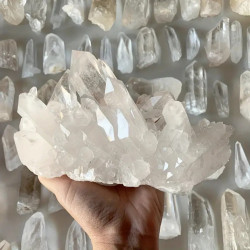
Every workable grid has an anchor. Choose one stone to hold the centre - clear quartz is the traditional all-purpose choice because it is said to amplify, but citrine for abundance work, rose quartz for self-kindness, or amethyst for calm are all common picks. Size matters less than commitment: this is the stone the rest of the layout defers to.
Place the written intention first, then the centre stone on top of or over it. That sequencing - purpose beneath the anchor - is the quiet core of the whole method.
Choosing the Surrounding Stones
Keep it to two or three varieties at most; a grid with eight different minerals is a display, not a practice. The supporting stones repeat the theme of the intention. For an abundance grid: citrine centre, green aventurine and pyrite around it, clear quartz points to connect. For a rest grid: amethyst centre, lepidolite and moonstone around, quartz to link.
Beginner-Friendly Layouts
Shape is the geometric layer of the practice, and simple shapes have stood the test of time. A triangle of three stones around the centre suits focused, single-goal work. A square of four evokes stability and the four elements, a good match for protection or grounding intentions. A circle of eight to twelve stones creates what practitioners describe as a closed, holding field. The flower-of-life pattern, with nineteen or more stones, is the traditional choice for larger "major project" grids - beautiful, but not where a first grid should start.
Any cloth or board works as a base; natural materials such as wood or linen are traditionally preferred because they are said to ground the arrangement.
Activation: Drawing the Invisible Lines
The step beginners most often skip is activation, and it is the step that turns a display into a grid. Using a quartz point - or simply a finger - start at the centre stone, "draw" an invisible line to each surrounding stone in turn, and return to the centre before moving to the next, walking the whole layout until the loop closes. Practitioners describe visualising light following the point. Whether one treats that as literal energy or as focused attention, the effect is the same: the arrangement becomes one connected object in the mind.
A short spoken statement at the end - "this grid now works on [your intention]" - closes the ritual.
How Long Should a Grid Stay Up?
Traditions vary, but two numbers recur. Small grids are traditionally left undisturbed for at least forty-eight hours, and grids intended to support a longer project are kept for around thirty days, with a monthly cleanse and re-activation. To close a finished grid, the courtesy is to dismantle it in reverse - outer stones first, centre stone last - rather than sweeping it into a drawer.
Placement and Care
Choose a spot the grid will not be knocked, and cleanse every stone before setting up - smoke, sound, or a night under the moon are the usual options. Some practitioners add a candle beside the grid for the first evening; others place it where they will pass it daily, since the passing glance is the mechanism by which a grid keeps doing its quiet work.
One last honesty note that serious teachers always include: the grid does not replace action. It is a focusing instrument. The centre stone holds the intention; you still have to write the page, make the call, take the walk.
If you are choosing a piece to anchor a practice like this, the collections at RedKnotr are organised around exactly these correspondences, so you can match a stone to the intention you have in mind.
Frequently Asked Questions
Do the stones in a grid have to be large?
No. Practitioners consistently hold that small or rough chips work as well as showpiece specimens, because the layout - not the size - carries the structure. A grid of modest tumbled stones on a saucer is a perfectly legitimate setup.
Can I run a love grid and a money grid side by side?
Yes, as separate grids. The one-purpose rule applies per arrangement, not per household. Keep them in different spots and give each its own written intention.
What if my grid gets disturbed - by a pet, a child, a cleaning day?
Nothing is ruined. Reassemble the stones where they belong, or treat the interruption as a signal to refresh: re-cleanse, restate the intention, and reactivate. Some practitioners read a stone that keeps "wandering" as a prompt to reconsider the wording of the intention itself.
How do I know if the grid is "working"?
Most people find the honest measure is behavioural, not mystical: you notice the intention more often, and actions aligned with it come easier. Tradition holds that the stones amplify; the calendar and the notebook are how you verify it.
Tags: crystal grid, center stone, crystal layout, intention setting
Related Pieces
View All →

This content is copyrighted by its original authors. In case of any infringement, please contact us for removal.
Comments
Write a comment