Built Sensitive, Built to Last: An Energy Management Ritual Kit for Highly Sensitive People
By RedKnotr Editorial - 10/10/2026 - 0 comments
Some nervous systems are simply tuned to a higher gain. Highly sensitive people — often abbreviated HSPs — tend to register subtleties others miss: a shift in a colleague's tone, the mood of a room, the flicker of someone's suppressed frustration. Many people find this depth of perception is a genuine gift. It is also, without structure, a genuine drain. Personal energy management for sensitive people is less about becoming tougher and more about becoming deliberate.
Sensitivity is a capacity issue, not a character flaw
Practitioners of energy work and psychologists alike describe sensitivity as a processing style: more input comes in, so more energy goes out to handle it. That reframing changes everything. A sensitive person who feels exhausted after a normal day is not weak or lazy — they are running a high-fidelity system on the same battery everyone else gets. The answer is not willpower. It is architecture.
Build an energy shelter before you need one
An energy shelter is a pre-built place and time where your system can drop offline and recharge. It works best when it is small, specific, and non-negotiable.
- A corner of a room with a cushion, a lamp, and nothing else that demands anything of you.
- Fifteen minutes at lunch with noise-canceling headphones and one slow playlist.
- A short, quiet walk home by a calmer route instead of the crowded shortcut.
The detail matters less than the covenant: this is charging time, defended like the last ten percent of a phone battery. Sensitive people who schedule solitude like an appointment — rather than waiting for leftovers at the end of the day — consistently report steadier evenings.
Practice selective empathy: care without carrying
One of the quietest energy leaks is empathy without a membrane. You notice someone is down, and before you know it, their weather has become yours. Many practitioners teach a distinction that helps: you can understand an emotion without adopting it, and support someone without signing up to be responsible for their inner state.
A simple translation tool: when you sense someone's fatigue or frustration, convert the feeling into a caring question — "You seem a bit worn out; want to talk about it?" — and let the question carry the care. The feeling gets acknowledged, the other person gets seen, and the emotion stays theirs. Empathy as a bridge, not a sponge.
The evening energy dump
Whatever the day deposited, do not sleep holding it. Many sensitive people find an evening release ritual — five minutes, no screens — changes the texture of the whole night:
- Write the brain dump. Everything on your mind, unedited: the tense meeting, your friend's bad news, the worry about tomorrow. Then close the notebook.
- Take the symbolic rinse. A warm shower with a simple image — the water carrying away anything that is not yours. Pay attention to hands and feet, where the day was literally touched.
- Set down what is not yours to carry. Say it plainly, even silently: that deadline is real, but that coworker's irritation is theirs.
Boundaries are an emotional-layer skill
In the five-layer model of personal energy management, boundaries live on the emotional layer — the layer that decides what gets in and what stays out. For sensitive people, boundaries are not walls; they are membranes with a permeability you choose. Three levels work in practice:
- Light, for acquaintances: "That sounds really tough — I hope it eases up soon." Then a subject change. Warmth without a follow-up question.
- Clear, for friends and family: "I care about this, and I don't have the bandwidth today. Can we pick it up tomorrow?"
- Firm, for chronic drains: less time, shorter visits, and no apology tour afterward.
Every honest no reinforces the membrane. Every resentful yes thins it.
Match the practice to the five layers
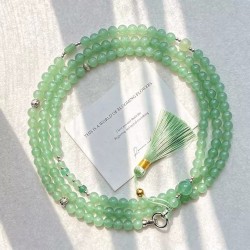
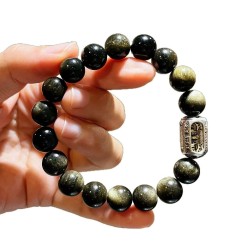
A full week of sensitive-system care spreads across all five layers of the model. Physical: sleep, steady meals, barefoot minutes on grass or soil. Emotional: the shelter and the evening dump above. Mental: turn overthinking into directed thinking — pick one topic, write it out, land it somewhere. Spiritual: a few minutes of quiet that reminds you which feelings are actually yours. Symbolic: a worn reminder of the boundary you are practicing; a grounding piece from RedKnotr, touched on the way into a hard meeting, can serve as exactly that cue.
FAQ
How much alone time do sensitive people actually need?
There is no fixed dose, but many people find thirty minutes of genuinely uninterrupted solitude daily is a workable minimum, with longer stretches after high-stimulation days.
Is shielding visualization just imagination?
Practitioners say its value lies in the cue it gives the nervous system: a brief, repeated image of a boundary — a quiet gold light, for instance — functions as a decision to filter input, whether or not anything "metaphysical" happens.
What if I cannot avoid draining people?
Reduce the dose and shorten the exposure: sit by an exit, take a walk break midway, plan recovery time immediately after, and let the evening dump handle the residue. Structure first, confrontation second.
Tags: energy management, highly sensitive person, energy shelter, selective empathy, emotional boundaries
✧ Go deeper ✧
Explore more, shop the crystal, dive into the topic
Explore more articles
View all articles →- The Rest That Tires You: Why Passive Recovery Fails and What Actually Recharges Each Energy Layer (October 2026) 18/10/2026
- The Company Your Energy Keeps: Mapping Energizers and Drainers in Your Week (October 2026) 17/10/2026
- The 100-Decisions Morning: A Decision Budget That Keeps Your Mental Energy Past Noon (October 2026) 17/10/2026
- The Three-Minute Gap: Why Your Energy Leaks Between Tasks, and How to Close It This October 2026 16/10/2026

This content is copyrighted by its original authors. In case of any infringement, please contact us for removal.
Comments
Write a comment