The Triskele and the Turning Year: What Ancient Spirals Teach About Geometric Energy in Motion (October 2026)
By RedKnotr Editorial - 18/10/2026 - 0 comments
Long before anyone wrote down a definition of sacred geometry, people were carving spirals into stone. The triskele - three interlocking arms rotating around a shared centre, found at Newgrange in Ireland and dated to roughly 3200 BCE - is older than the pyramids, older than most written language, and it survives because the shape does something to the eye that a straight line cannot.
What the shape actually is
Strip away the Celtic revival packaging and the triskele is a specific geometric proposition: three identical spiral arms, each rotating out from a common centre, spaced at 120 degrees. That 120-degree interval is the same division you get from an equilateral triangle, which means the triskele is really a triangle that has been set in motion.
This is not mysticism, it is measurement. Three equal arms at 120 degrees produce perfect rotational symmetry - rotate the figure by a third of a turn and it maps onto itself. The shape is stable under rotation while every individual line inside it is curving. That combination, stable overall and moving locally, is why the symbol reads as "cycle" to almost everyone who meets it, whether or not they know the geometry.
Why three, and not two or four
Two-armed symmetry gives you opposition: yes and no, light and dark, a mirror. Four-armed symmetry gives you a grid: north, south, east, west, fixed and static. Three is the smallest number that produces a cycle rather than a contrast, because the third point is what forces the return. One, then two, then three, then back to one - the sequence closes on itself.
In shape energy terms, that is the difference between a symbol you look at and a symbol you move through. A cross tells you where you are. A triskele tells you where you are in the rotation.
The three arms as a working model
Different traditions assign different content to the three arms. Physical, emotional and mental. Past, present and future. Earth, sea and sky. The assignments matter far less than the structure they share: three states that succeed each other in a fixed order, with no state able to skip ahead.
That is the practical value. When you are in one arm, you are not failing to be in the others - you are simply at one-third of a turn. Most of the frustration people bring to energy work comes from expecting to occupy all three positions at once, which the geometry itself rules out. The triskele is a reminder that sequence is not a limitation, it is the mechanism.
Working with spiral motion this autumn
October is a natural triskele month in the northern hemisphere: the light is turning, the year is closing a third of its arc, and the impulse to take stock arrives without being invited. You do not need an altar for this. Three simple practices, each built on the 120-degree interval:
1. The third-turn review. Pick a project or a habit that has been running for about four months. Instead of asking "is it working?" ask "which third am I in?" Beginning, middle, or return. The question is answerable, and the answer changes what you do next.
2. Walk the rotation. Choose three places you pass regularly - a doorway, a window, a particular chair. Assign each one an arm: what is starting, what is ongoing, what is closing. Physically moving between them, even in a small flat, externalises the cycle in a way that sitting and thinking does not.
3. Hold the centre. The triskele has a middle, and every arm originates there. Ten minutes with attention on the point between the arms - not on any one of them - is the geometric equivalent of stopping at the hub instead of running the rim. It is the least glamorous of the three and usually the one people need most.
Wearing the shape
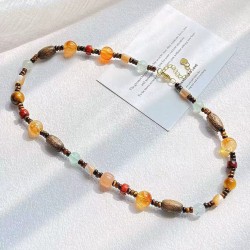
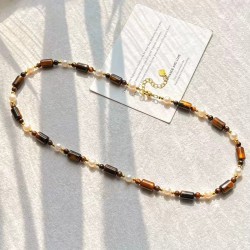
Spiral forms appear in jewellery because they are visually satisfying, and that is a legitimate reason to wear one. If you want the shape to carry an intention as well, the convention that works best is the simplest: choose a piece where the arms rotate in the direction that matches what you want more of. Clockwise arms read as outward and generative; counter-clockwise as inward and consolidating. Neither is better. Autumn, being a turning-in season, tends to sit with the second.
What the triskele offers, finally, is not protection or luck but orientation. It is a very old answer to a very ordinary question - where am I in this? - carved small enough to carry.
Tags: Triskele, Triple Spiral, Geometric Energy, Spiral Geometry, Celtic Symbols, Shape Energy, Sacred Geometry, Threefold Motion, October 2026
✧ Go deeper ✧
Explore more, shop the crystal, dive into the topic
Explore more articles
View all articles →- Five Forms, Five Days: A Platonic Solids Rotation for Shape and Geometric Energy (October 2026) 17/10/2026
- The 1.618 Feeling: Why Golden Ratio Proportions Calm the Eye, and How to Live With Phi This October 2026 17/10/2026
- One Shelf, Five Shapes: Setting Up a Geometry Corner for Calm and Focus This October 2026 16/10/2026
- The Hexagon Effect: Why Nature's Most Efficient Shape Belongs in Your Jewelry Box 16/10/2026

This content is copyrighted by its original authors. In case of any infringement, please contact us for removal.
Comments
Write a comment