Your Birth Chart Is a Mind Map, Not a Verdict: Psychological Astrology for October 2026
By RedKnotr Editorial - 06/10/2026 - 0 comments
Your Birth Chart Is a Mind Map, Not a Verdict
If you have ever walked away from a horoscope feeling boxed in, psychological astrology will feel like fresh air. This growth-centered framework reads the birth chart as a mind map rather than a fixed fate. Where predictive astrology asks "what will happen?", the psychological approach asks "what patterns am I working with, and how do I want to engage them?" The distinction matters: tradition holds that the chart describes potentials and habits, not sentences. You are always the one holding the pen.
This October, as the longer nights invite more inward reflection, it is a natural moment to sit down with your chart and treat it the way a thoughtful counselor would treat a personality sketch: with curiosity, compassion, and a bias toward action.
How Psychological Astrology Reframes the Chart
Practitioners of psychological astrology draw heavily on the ideas of Carl Jung, who described the birth chart as a kind of mirror of individual typology. In this reading:
- Planets are functions of the psyche. Mars describes how you assert and defend; Venus maps how you seek comfort and connection; Mercury shows your thinking style.
- Signs color those functions. The sign tells you the style in which a planetary drive tends to express itself.
- Houses show where the action happens. They mark the life domains — career, intimacy, creativity — where a pattern shows up most tangibly.
- Aspects describe inner conversations. A square between two planets is friction between two drives; a trine is an easy alliance.
Nothing here is "good" or "bad." A challenging aspect is not a flaw; it is usually the most interesting growth assignment in the chart.
The Four Elements as Perceptual Modes
One of the fastest ways to understand your chart is through the four elements — Fire, Earth, Air, and Water. Rather than personality labels, think of them as four perceptual filters:
Fire — the intuition mode
Aries, Leo, and Sagittarius tend to apprehend life through hunches, momentum, and direct engagement. When fire is balanced, it is inspiring and courageous; when overheated, it can burn out or leap before looking.
Earth — the sensation mode
Taurus, Virgo, and Capricorn trust the tangible: results you can touch, budgets you can audit, routines you can keep. Balanced earth is reliably productive; rigid earth can turn cautious into stuck.
Air — the thought mode
Gemini, Libra, and Aquarius live in ideas, language, and perspective-taking. Healthy air is articulate and adaptable; excess air can spiral into overthinking and detachment from feeling.
Water — the feeling mode
Cancer, Scorpio, and Pisces navigate by emotional resonance and empathy. Balanced water is perceptive and healing; flooded water absorbs more than it can process.
Check your own elemental balance — count the planets in each element across your chart. A five-planet fire chart with almost no earth experiences a very different world than the reverse, and each distribution calls for its own kind of self-care.
Modalities: How Your Energy Moves
The second layer is quadruplicity, or modality. Cardinal signs (Aries, Cancer, Libra, Capricorn) initiate; fixed signs (Taurus, Leo, Scorpio, Aquarius) sustain; mutable signs (Gemini, Virgo, Sagittarius, Pisces) adapt. Combined with the elements, modality explains why two water signs can feel so different: Scorpio's fixed water concentrates feeling, while Pisces's mutable water diffuses it. Many people find that recognizing their modality habits — brilliant beginnings that fade, or loyal persistence that resists necessary change — is the single most actionable insight in the whole chart.
A 20-Minute October Practice: Reading Your Chart as a Growth Map
Step 1: Anchor the big three (5 minutes)
Write down your Sun, Moon, and rising sign in one sentence each — what each one seems to want, in your own words. No textbooks required; observation comes first.
Step 2: Name one recurring loop (5 minutes)
Pick a pattern that repeats in your relationships or work. Ask: which two planets in my chart are "talking" here? Hard aspects between them often describe exactly this loop.
Step 3: Reframe one square (5 minutes)
Take the most uncomfortable aspect you can find and translate it into a skill. Mars square Saturn is not "frustration forever" — it is an invitation to learn disciplined assertiveness.
Step 4: Set one micro-experiment (5 minutes)
Use the current season's transits as timing. A Saturn-flavored month favors structure and boundary work; a Jupiter-flavored one favors learning and expansion. Choose a two-week experiment so small you cannot fail it, and journal what shifts.
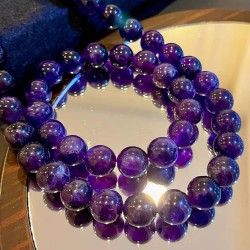
Many practitioners pair this reflection with a physical anchor — a stone, a color, or a piece of jewelry tied to your Sun, Moon, or rising sign — so the insight has a daily reminder. If that resonates, the zodiac-aligned crystal jewelry at RedKnotr makes a quiet, wearable companion for the work.
What Psychological Astrology Is Not
It is worth being clear about the boundaries. This approach is not prediction, not diagnosis, and not a replacement for therapy when clinical care is needed. It is a symbolic language — one detailed enough to name specific patterns rather than vague moods, and humane enough to leave your choices intact. The chart shows the weather; you still decide how to sail.
FAQ
Is psychological astrology the same as a personality test?
No. Personality inventories compress you into a type; a birth chart holds dozens of interacting symbols. Most people find it richer precisely because it resists tidy categories and describes tensions rather than traits.
Do I need an astrologer to start?
Not at all. Free chart tools show you the placements, and the observation exercises above need no technical skill. A practitioner is helpful later, mainly for synthesis — a skilled reader connects placements you might read in isolation.
Can challenging aspects actually be useful?
Practitioners say yes — often emphatically. The squares and oppositions in a chart mark where energy is concentrated, and people who engage them consciously tend to report the deepest growth.
How often should I revisit my chart?
Monthly is a gentle rhythm. Pair each review with one transit theme and one small experiment, and keep notes — three months of observations will teach you more than any single dramatic reading.
Tags: Psychological Astrology, Birth Chart, Four Elements, Inner Growth, October 2026
✧ Go deeper ✧
Explore more, shop the crystal, dive into the topic
Explore more articles
View all articles →- Saturn Return, Gently: A Psychological Astrology Reading of the Great Audit Underway in October 2026 18/10/2026
- The Direction, Not the Destiny: Reading Your Nodal Axis as a Growth Map This October 2026 17/10/2026
- The Inward Planets: Reading Natal Retrogrades as a Psychological Growth Map (October 2026) 17/10/2026
- Your Chart Ruler, Explained: The Planet That Carries Your Rising Sign Into Daily Life (October 2026) 16/10/2026


This content is copyrighted by its original authors. In case of any infringement, please contact us for removal.
Comments
Write a comment