The Wardrobe Diary: Thirty Days of Colour, Mood and What Your Closet Already Knows (October 2026)
By RedKnotr Editorial - 22/10/2026 - 0 comments
Every closet keeps a diary whether or not you agree to write it. The proof is in the mornings you reach for the soft grey knit without deciding to, or the week everything you pick is black, and only later do you notice the week was hard. A wardrobe colour mood diary turns that accidental record into a deliberate one: thirty days of noting what you wore and how the day went, until the patterns in your own colour behaviour become visible enough to use.
The science in the background
The most-cited finding here is enclothed cognition, from research by Hajo Adam and Adam Galinsky. In their well-known experiment, participants wearing a lab coat described as a doctor's coat performed better on attention tasks than participants wearing the identical coat described as a painter's. The mechanism is two-part: the symbolic meaning of the clothing and the physical experience of wearing it, together, shape the wearer's thinking. Your clothes do not just reflect your state; they participate in producing it. A colour diary works because it observes both directions, what your moods choose and what your choices then do to the day.
The method: two lines and a photo
Keep it simple enough to survive a month. Each evening, log two things. First, the outfit: a quick photo plus one line on the dominant colours, the fit (structured, loose, in between) and the style register (professional, casual, comfort). Second, the mood: a rating from one to five and three keywords, written before you consult the photo. Do not overthink the mornings at all; the experiment runs on first-reach choices, the instinctive pick, not the curated one. Morning deliberation is data about aspiration. Evening logging is data about reality, and the interesting patterns live in the gap between them.
Patterns worth watching for
- The shield days: most diarists find dark neutrals, black and navy clustering on days marked anxious, needing control or less social. These colours function as a boundary and a small authority. The pattern is not a problem; the awareness is the upgrade. You can then ask whether the shield was chosen or merely worn.
- The low-energy neutrals: grey and beige clustering on tired, reflective days. Comfort reading as camouflage. Fine for recovery, worth noticing when it becomes a week.
- The focus colours: many people find blue and green on their steady, productive days, the work-from-home staples. Your own version may differ, which is exactly the point of running the diary on yourself rather than borrowing a chart.
- The bright experiment: the most reported surprise: on days when the mood was low but a bright colour was worn anyway, the evening mood rating tends to come in higher than the morning one. This is enclothed cognition running in the useful direction, and it is the single most actionable pattern in most diaries.
- The fit split: structured, tailored pieces correlate with armor days, task-focused and competent; loose and soft correlate with care and creativity. Neither is better. The diary tells you which one a given week actually needs more of.
- The weekend switch: the weekday and weekend wardrobes often split so cleanly that they function as a mental boundary. Useful, as long as the switch remains something you perform rather than something that performs you.
Personal association beats every generic chart
Generic colour psychology will tell you red energises and blue calms. Your diary may tell you that red grounds you and that one particular shade of mustard overstimulates you by afternoon. Trust the second source. The personal history a colour carries, a childhood kitchen, a university scarf, a colour that belonged to someone difficult, outweighs any population average, and the diary is precisely the instrument for finding your own averages.
A three-week design
If thirty days sounds long, run three themed weeks. Week one, observe only: log, photograph, change nothing. Week two, intervene once daily: choose one deliberate colour toward the state you want, and log whether the day bent at all toward the choice. Week three, test the accent rule: instead of overhauling outfits, add one small, repeated accent, a ring, a cord, a stone in an indigo or coral that the first two weeks flagged as useful, and see whether ten percent of the outfit can carry most of the intention. Jewellery earns its place here: it is the portable line of the diary, the entry you wear instead of writing.
The boundary of the practice
Colour is a tool, not a therapy. A grey week is information, not a diagnosis, and forcing brightness on grief usually just adds a costume. The diary's promise is modest: after a month you will know which colours your low days reach for, which ones reliably lift the evening rating, and which accent can be carried on the body as a small, repeatable intervention. That knowledge turns the closet from a daily dilemma into a working palette, and it generalises: once you have watched colour move mood for thirty days, you will never quite look at a room, a plate or a screen the same way either.
To start the accent-rule experiment with a piece chosen for its colour, you can browse the wearable options at https://www.redknotr.com/.
Related Pieces
View All →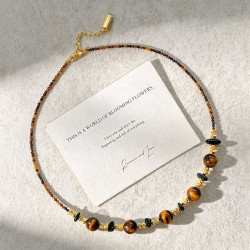






This content is copyrighted by its original authors. In case of any infringement, please contact us for removal.
Comments
Write a comment