Black Obsidian
Obsidian is not a crystal — it is volcanic glass, formed when lava cools too fast to crystallize. That gives it a mirror-black surface no mineral can match, and also a hardness of only Mohs 5 to 5.5, which shapes what it should and should not be used for. The range below is weighted toward pendants and necklaces for that reason.
A Glass, Not a Crystal
Obsidian is amorphous silica glass with no crystal lattice at all. Mohs hardness 5–5.5, specific gravity around 2.35–2.60, and a conchoidal fracture that produces edges sharper than surgical steel — which is why it was the primary cutting tool material of the Stone Age and is still used in some surgical blades. The black colour comes from iron and magnesium; the "rainbow" and "golden sheen" varieties show thin layers of microscopic bubbles or cristobalite that diffract light.
Because it is glass, it behaves like glass: it chips rather than scratches, and a hard knock can take a bite out of an edge. That is the single most important practical fact about obsidian jewelry.
Meaning and Tradition
Obsidian's symbolic record is unusually widespread — Aztec mirrors, Neolithic blades, and protective amulets across cultures. In crystal tradition it is the stone of truth and of clearing: it is associated with the root chakra, with protection, and with bringing hidden things into view. Its mirror surface is central to that reading. In astrology it is most often assigned to Scorpio and Capricorn. Note that obsidian is sometimes described as "the stone of the shadow" — that framing is tradition, not a claim about the material.
Which Forms Work
- Pendant — the best form. A polished obsidian cabochon or point sits away from impact and shows the mirror polish.
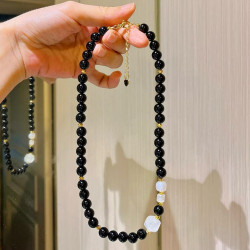
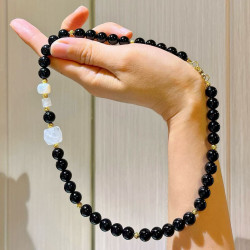
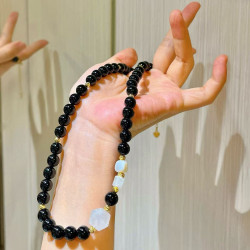
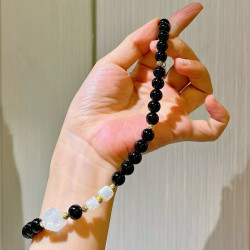
- Necklace — beaded strands are fine, but check beads periodically for chips at the drill holes.
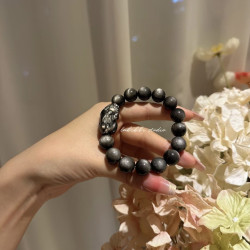
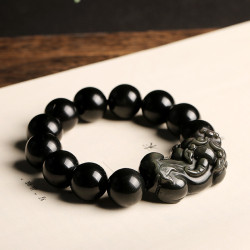
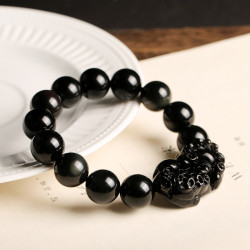
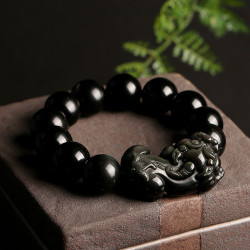
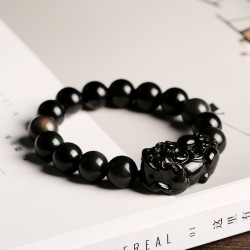
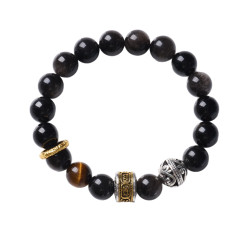
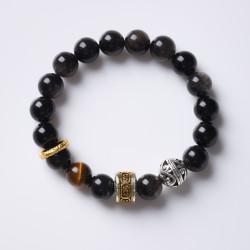
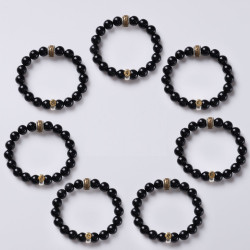
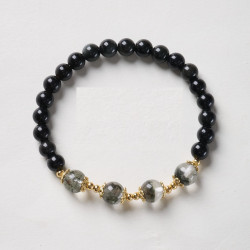
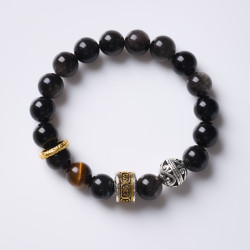
- Bracelet — wearable, but the highest-risk form because wrists contact desks and door frames constantly.
- Ring — not recommended. Obsidian rings chip quickly.
Care
Wipe with a soft damp cloth; avoid abrasives, ultrasonic cleaners and steam, all of which can cloud the polish over time. Store separately so harder stones do not score it. Because obsidian is glass, avoid sudden temperature change — it can crack.


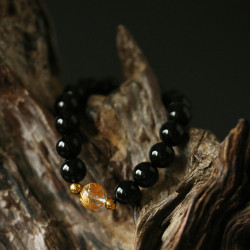


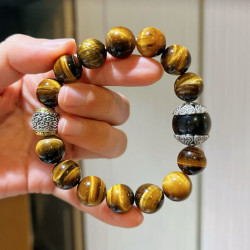


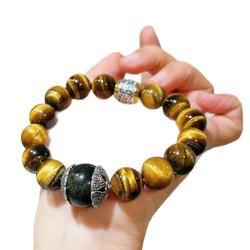


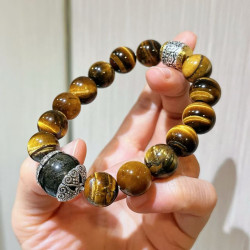

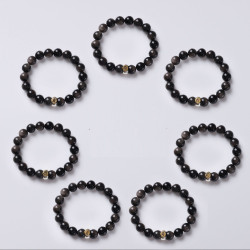
Natural Tiger Eye Silver Obsidian Men's Beaded Bracelet