The Contract Under the Crush: Reading Juno, the Asteroid That Shows What You Can Actually Sign For (November 2026)
By RedKnotr Editorial - 30/10/2026 - 0 comments
Two Questions, Two Different Charts
Ask someone what they want in a partner and you will usually get an answer about attraction: someone funny, someone steady, someone whose presence makes a room feel easier. Ask the same person what they need in order to actually stay, and the answer often changes shape entirely. Psychological astrology has a tidy way of separating these two questions. Venus describes the pull. Juno describes the signature.
Juno is the third asteroid ever discovered, spotted in 1804 and named for the Roman goddess who protected marriage and swore her own vows. In a birth chart she is read as the archetype of committed partnership: the terms you need in order to feel that an agreement is real. Not chemistry. Terms.
This distinction matters because most relationship disappointment is not a failure of attraction. It is a failure of terms that were never spoken aloud.
What Juno Is Traditionally Held to Show
Practitioners read Juno on three levels, and the order is useful. The sign describes the qualities you require in a long-term partner and the style of commitment that feels legitimate to you. The house describes the area of life where that commitment gets tested, negotiated and sometimes quietly renegotiated. The aspects describe the texture: how easy or effortful the whole arrangement feels.
It is worth saying plainly that this is a symbolic language, not a predictive instrument. Nobody's chart promises a wedding date. What a Juno placement offers is a vocabulary for the conditions under which you flourish, and a way to notice when you have agreed to something you never actually wanted.
The Sign: What You Require
The sign is the least glamorous part of the reading and the most practical. Juno in an independence-loving sign needs room to move inside the relationship; a partner who checks in hourly will read as devotion to them and as surveillance to you. Juno in a sign that values steadiness needs reliability made visible, not just felt. Juno in a communicative sign needs the conversation to keep going, even when the conversation is uncomfortable.
Here is a useful test. Read your Juno sign's requirements and notice which one makes you feel slightly defensive. That is usually the requirement you have been calling a preference while treating it as optional. Requirements that were optional in your twenties tend to become non-negotiable in your forties, which is why the same relationship can feel generous at thirty-five and insufficient at forty-five without anyone behaving worse.
The House: Where the Contract Gets Tested
The house shows the arena. Someone with Juno in a career-facing house tends to build partnership alongside ambition, and can mistake a shared project for shared intimacy. Someone with Juno in a house of home and roots tends to need the relationship to become a place rather than a schedule. Someone with Juno in a house of privacy may keep the most important parts of a partnership out of view, which is not secrecy so much as a need for a room without an audience.
Read the house as the place where the fine print gets exercised. That is where you will notice whether the terms you claimed to want are the terms you are actually living.
Aspects: The Fine Print
Aspects to Juno colour how the contract feels to maintain. A harmonious contact to Venus tends to make commitment feel continuous with affection, so the two do not compete. A hard contact to Saturn often brings delays, tests and a slow proving period, which can look like reluctance from the outside and feel like quality control from the inside. A contact with Pluto tends to concentrate the question of power: who decides, who yields, who holds the information.
None of these are verdicts. They are descriptions of where the negotiation is likely to be loud.
Resentment Is a Ledger Error
The most useful thing Juno offers is a way to read resentment. Resentment is rarely about the specific incident in front of you. It is the interest accruing on an unstated term. You agreed to something you did not name, your partner agreed to something they did not hear, and both of you have been keeping separate books ever since.
When you notice that low hum of irritation about the same small thing for the third month, the honest question is not "why do they keep doing that" but "what did I never put in writing". That is a Juno question, and it is answerable.
A Twenty-Minute Contract Audit
Set a timer. Take three sheets of paper, or three notes on your phone.
- Terms. From your Juno sign and house, write three conditions that make a partnership feel legitimate to you. Use plain language: "I need to be told about money decisions before they happen", not "I need security".
- Evidence. For each term, write one recent moment when it was met and one when it was not. Be specific about dates. Vagueness is how a ledger stays unbalanced.
- Silence. Mark which of the three you have never actually said out loud to anyone. That is your real work for the month, and it does not require a conversation with a partner if you are not in one. It requires a sentence you can say without apology.
Twenty minutes, once a quarter, is enough. The point is not to audit other people. It is to stop signing documents you have not read.
Juno Is Not a Verdict on Your Relationship
It is tempting to hand a chart to a situation and ask for a ruling. Psychological astrology works better as a set of questions than as a court. Juno asks: what did you agree to, what did you assume, and which of those two things is currently running your life? Those questions survive breakups, marriages, long friendships and the strange arrangements people build in between.
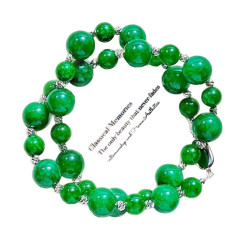
If you want a physical anchor for the work, an oval or ring-form piece worn close to the body can serve as a reminder of the terms you are trying to keep: RedKnotr's crystal pendants are chosen by many readers for exactly this kind of quiet daily cue.
FAQ
Is Juno the same as Venus in a chart?
No. Venus describes attraction, taste and the early stages of love. Juno describes committed, contractual partnership: the conditions under which you can build a shared life. People are often attracted to one kind of person and able to commit to another, and the two placements frequently explain the gap.
Do I need an exact birth time to read Juno?
For the sign and aspects, no. For the house, yes, because houses depend on the time and place of birth. If your time is uncertain, work with the sign and aspects first and treat the house as provisional.
What does a Juno-Sun contact between two charts mean?
Practitioners commonly read it as a strong marker of commitment potential: the Sun person embodies something the Juno person recognises as a partner. It is a description of resonance, not a guarantee of outcome.
Can Juno show why a good relationship felt wrong?
Often, yes, in the sense that it names a term that was never met. The chart does not explain the other person's behaviour, but it can explain why a perfectly decent arrangement kept feeling like the wrong contract.
Tags: Juno asteroid, commitment astrology, relationship chart, asteroid aspects
Related Pieces
View All →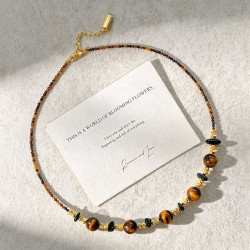






This content is copyrighted by its original authors. In case of any infringement, please contact us for removal.
Comments
Write a comment