Eight Sides of a Threshold: What the Octagon Does That Circles and Squares Cannot (October 2026)
By RedKnotr Editorial - 25/10/2026 - 0 comments
The square sits firmly on the ground. The circle has already left it. Between them stands a third form that most of us walk past every day without naming: the octagon, eight sides turning a rigid earth-bound plan toward the openness of the round. Ancient builders considered it the shape of transition, and once you start looking, the octagons are everywhere thresholds matter, from baptisteries to lighthouses to the wind tower that still stands in the middle of Athens.
The geometry of the in-between
Start with the plain mathematics. A regular octagon's interior angles are 135 degrees, so it holds corners like a square but turns more gently, approximating a circle while remaining buildable from straight edges. Structural engineers value that softness: an octagonal plan distributes loads more evenly than a square, with no long unsupported spans and no weak parallel walls, which is a quiet reason lighthouses, watchtowers and pagodas kept choosing eight sides against wind and earthquake. Symbolically, tradition reads the same fact in the other direction: the octagon stands between the square of the earth and the circle of heaven, a hinge between the two.
The eighth day: why baptisteries are round-ish
Early Christian architecture took that reading literally. Seven days make the week; the eighth day, in Christian symbolism, is the day of resurrection and new creation. So baptismal fonts and baptisteries, the buildings where new life was enacted, were built octagonal almost as a rule, from Florence's famous Baptistery to countless parish fonts. The geometry preached before the priest did: you enter through a shape of beginnings. Renaissance theorists such as Leon Battista Alberti carried the idea forward, treating the octagon as the honest mediator between human building and divine roundness.
The same mediation appears in Islamic architecture, where domes rest on octagonal transition zones that turn a square room into a circular heaven, most famously beneath the golden dome of the Dome of the Rock in Jerusalem. And in Chinese practice, the bagua, the eight-trigram map used in feng shui, makes the octagon the diagram of how a space holds energy, a shape practitioners still place at thresholds and mirrors today.
Athens answers with eight winds
The most eloquent octagon ever built may be the Tower of the Winds in the Roman Agora of Athens, raised in the first century BC by the astronomer Andronicus of Cyrrhus. Eight sides in Pentelic marble, each facing a point of the compass, each carved with the god of the wind that blows from that direction: Boreas the north wind, mild Zephyrus from the west, stormy Kaikias from the northeast. Below the frieze, eight sundials were etched into the eight faces; inside, a water clock told time when the sun did not cooperate; on top, a bronze Triton weathervane turned with the wind. It has been called the world's first meteorological station, and it is, above all, a building that treats eight as the number that knows every direction, the four cardinal points plus the four in-between, the shape of full orientation.
Living with the eight-sided idea
Practitioners of geometric energy work suggest a few grounded ways to borrow the octagon's qualities, with the honest caveat that these are symbolic practices, meaningful because attention makes them meaningful.
- The threshold object: place something eight-sided where transitions happen, a doormat, a bowl for keys, a small octagonal dish by the door. Let it mark the line between outside and home, work and evening, and pause there for one breath when you cross.
- The eight-point check: Borrow the tower's compass. Around a circle of eight points, write the eight directions your week flows: rest, work, people, body, money, learning, play, quiet. Once a week, mark which direction the wind is actually blowing from, and which you have been ignoring.
- The softened corner: where a room feels tense, see whether an octagonal form, a table, a tray, a pendant with a faceted eight-sided cut, eases the sharpness of a boxy space. Builders chose the form against high wind; households may find it gentles the indoor weather too.
Worn close to the body, an eight-sided stone or faceted bead carries the same quiet grammar: enough edges to hold a direction, enough turning to not get stuck on any one of them. Tradition holds that the shapes we live among shape the conversations we have, and the octagon's particular sentence is this: you are between things, and between is a fine place to stand.
Curious which forms and stones carry your story? Browse the pieces at RedKnotr and see what catches your eye.
Frequently asked questions
Why is the number eight associated with new beginnings?
In Christian numerology the seven days of creation are followed by an "eighth day" of resurrection and new creation, which is why baptisteries and fonts were so often octagonal. The shape became architecture's shorthand for a fresh start.
What does the octagon mean in feng shui?
The bagua, the feng shui energy map, is an eight-sided diagram pairing each side with a trigram and a domain of life. Octagonal shapes and mirrors are used to encourage balanced flow at thresholds and within rooms.
Is the Tower of the Winds really the first weather station?
It is often called that: a first-century BC octagonal tower combining a weathervane, sundials on all eight faces and a water clock, built by the astronomer Andronicus of Cyrrhus in the Roman Agora of Athens.
Do octagons have a real structural advantage?
Yes. Compared with squares, an octagonal plan spreads loads more evenly, resists wind and seismic forces better, and avoids parallel walls that reinforce echoes, one reason lighthouses, pagodas and chapels have used the form.
Tags: octagon, geometric energy, sacred geometry, symbolism
Related Pieces
View All →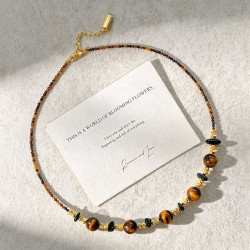


You May Also Like
All Articles →


This content is copyrighted by its original authors. In case of any infringement, please contact us for removal.
Comments
Write a comment