Three Questions, One Sky: What Your Sun, Moon and Rising Signs Actually Ask (October 2026)
By RedKnotr Editorial - 20/10/2026 - 0 comments
Almost everyone can answer the party question: "What's your sign?" It is a Sun-sign answer, and it is the least personal piece of information a birth chart contains. When a horoscope feels only half right, this is usually why. In psychological astrology, the Sun, the Moon and the Rising sign form the Big Three, and they are not three versions of the same answer. They are answers to three entirely different questions, asked by three different layers of the same person.
The Sun: the question of direction
The Sun sign describes the person you are in the process of becoming. It governs conscious identity, vitality and the values you organise a life around. Astrologers sometimes call it the central organizing myth of the chart: not what you are, but what you are growing toward. The Sun moves through the zodiac at roughly one sign per thirty days, which is why a birthday alone pins it down.
Because the Sun points forward, its questions are directional. What am I building? What would make the effort of this year feel meaningful? A Leo Sun and a Pisces Sun can both be ambitious, kind and disciplined, but they measure a good life in different currencies, and knowing which currency you actually use prevents a lot of borrowed ambition.
The Moon: the question of safety
The Moon sign describes your emotional constitution: what you need to feel safe, how you react before reason arrives, and the private inner weather that continues beneath the public self. The Moon changes signs roughly every two and a half days, so it is a more personal placement than the Sun, and it answers questions the Sun never asks. How do I process grief? What does comfort look like in my body? What do I reach for at the end of a hard week?
A Taurus Moon and an Aquarius Moon can belong to people with identical Sun signs and identical jobs, and the two people will still need opposite things on a bad day. One may restore itself with routine, a meal and a familiar room; the other may need novelty, air and a conversation that goes somewhere new. Neither need is an improvement on the other. They are simply different emotional grammars.
The Rising: the question of interface
The Rising sign, or Ascendant, is the zodiac sign rising on the eastern horizon at the exact minute of your birth. It changes roughly every two hours as the Earth turns, which is why it is the only one of the three that requires a birth time. Two people born on the same date in the same city, a few hours apart, can have entirely different Risings.
The Rising sign is often called a mask, and the word is slightly unfair. In psychological terms it is closer to Carl Jung's persona: not a lie, but the interface you have evolved for meeting the world. It shapes first impressions, instinctive behaviour in new situations, and the filter through which every other chart energy is expressed. Structurally it matters too: the Rising sign sets the entire house system of the chart, and its ruling planet becomes your chart ruler, the planet that carries your Rising sign into daily life.
Where the friction lives
The interesting material is rarely in any single placement. It is in the gaps between them. An Aries Sun with a Virgo Rising is a person whose directness arrives through a careful, self-editing doorway; colleagues may read the carefulness and miss the fire entirely. A Capricorn Sun with a Leo Rising may look like natural authority while privately holding itself to an exhausting standard of proof. A sensitive Cancer Moon carried by an Aquarius Rising may spend whole years being read as detached by everyone except the three people allowed past the interface.
These frictions are not malfunctions. A chart is a system of tensions, and the Big Three is the shortest complete description of which tensions you are actually running. When you know your three questions, you can stop grading yourself by the wrong one, the way an introvert with a performative job stops interpreting every evening crash as failure.
Why the traditions disagree, and what it teaches
Western popular astrology made the Sun the headline, but the Vedic tradition never did: classical Jyotish reads the Ascendant as the most consequential point of the chart and often answers "what is your sign" with the Moon sign instead. The disagreement is not really technical. It reflects two theories of the self: psychology as a portrait of who you are becoming, or psychology as an inventory of what you are here to resolve. Holding both views at once is useful. Your Sun deserves a direction; your Moon and Rising deserve the daily negotiation.
A twenty-minute Big Three audit
You can run this once with a free chart calculator and a notebook, and then repeat it at the start of any season that feels off.
- Answer the Sun's question: in one sentence, what am I becoming this year? Not what should I want. What am I actually moving toward?
- Answer the Moon's question: what do I need to feel safe this month, specifically, in the body? Name one condition, not a philosophy.
- Answer the Rising's question: how do I enter rooms, and what does that doorway cost me on a long day?
- Find the friction: circle the two answers that most often contradict each other. That pair, not any single sign, is your working material for the month.
Then run one small experiment: give the losing layer one deliberate concession this week. The Virgo Rising gets an hour of unedited thinking; the Cancer Moon gets the phone call it has been postponing. The Big Three earns its name not as vocabulary but as a negotiation table, and the negotiation only works when all three representatives speak.
An honest closing note
Psychological astrology is a mirror, not a forecast. It will not tell you what happens next month; it tells you which three questions you will keep asking regardless of what happens. There are 1,728 possible Sun-Moon-Rising combinations, which is one modest way of saying that people are complicated and that a single sign was never going to describe you. Learn all three, and the horoscopes can go back to being entertainment while the chart goes back to being what it does best: a compact, honest map of your own interior weather.
If you want a physical anchor for the practice, a small wearable chosen for the layer you keep neglecting can serve as the daily cue. You can explore such pieces at https://www.redknotr.com/ and pick the one you would actually touch on a hard day.
Related Pieces
View All →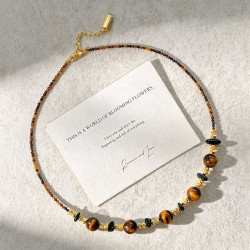





This content is copyrighted by its original authors. In case of any infringement, please contact us for removal.
Comments
Write a comment