Amethyst
Amethyst is the violet variety of quartz — the same mineral as clear crystal, colored by iron impurities and natural irradiation. At Mohs 7 it is hard enough for everyday bracelets and rings, which is why it has stayed the most worn purple stone in jewelry for two thousand years. Below you will find our full amethyst range, from deep Siberian-toned strands to pale lavender pendants.
What Amethyst Actually Is
Amethyst is quartz (SiO2) with trace iron and a color center created by natural radiation in the earth. It forms in six-sided prisms, often inside geodes — some Brazilian geodes are large enough for a person to stand in. Mohs hardness 7, specific gravity 2.65, white streak, no cleavage. That combination is why amethyst survives daily wear far better than softer favorites like opal or turquoise.
The name comes from Greek amethystos, "not intoxicated" — the stone was carved into drinking cups in the belief it would prevent drunkenness. Until Brazilian deposits were discovered in the 19th century, amethyst was priced alongside ruby and emerald. It is now the February birthstone and the gem for 6th and 17th wedding anniversaries.
Amethyst Meaning and Association
In crystal tradition amethyst is a stone of calm and clear thinking — the reason it is so often kept on a desk or bedside table rather than worn. It is most commonly linked to the third eye and crown chakras, and in Western astrology to Pisces, Aquarius and Sagittarius. These are cultural associations rather than scientific claims, but they explain why amethyst is the stone people reach for when they want to slow down rather than energize.
Choosing Between Bracelet, Necklace and Pendant
The right form depends on how much stone you want against your skin and how often you plan to wear it:
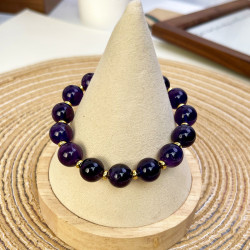
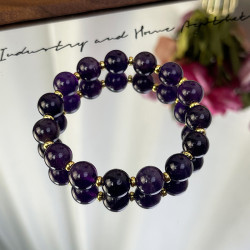
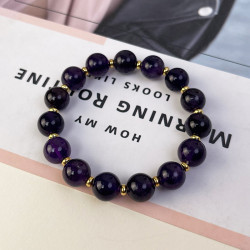
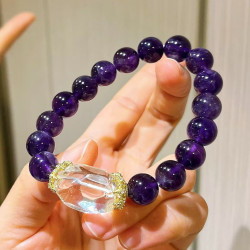
- Bracelet — the most-worn form. 8 mm beads suit most wrists; 10 mm reads bolder. Because it sits on the wrist it takes the most knocks, so check for chips near the drill holes over time.
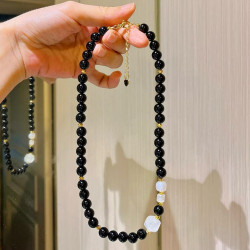
- Necklace — a longer strand gives more color per piece and is the easiest way to wear amethyst with a plain neckline. Layer with a finer silver chain rather than another stone strand.
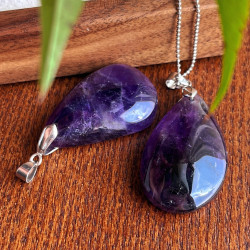
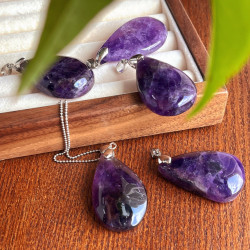
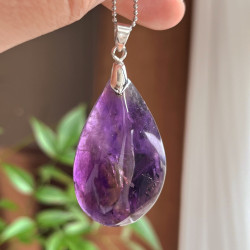
- Pendant — the safest choice for a single statement stone. It sits away from hard surfaces and shows the color zoning that makes amethyst recognizable.
- Earrings — light and comfortable, and the form least likely to be damaged.
Caring for Amethyst
Mohs 7 means amethyst resists scratching but is not indestructible. Warm water with mild soap and a soft brush is fine; ultrasonic cleaners are generally acceptable. Two real cautions: prolonged direct sunlight can fade the color, and heat above roughly 300–400 °C will turn amethyst yellow (that is, in fact, how heat-treated citrine is made). Remove amethyst before swimming in chlorinated water and store it away from harder stones like sapphire or diamond.
How to Tell Natural from Synthetic
Natural amethyst usually shows uneven color zoning and tiny inclusions under magnification; lab-grown quartz is often too even and too clean. Ametrine — purple and yellow in one crystal — occurs naturally only in Bolivia. If a piece is described as "green amethyst," it is prasiolite, a heat-treated form.






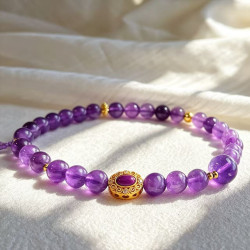

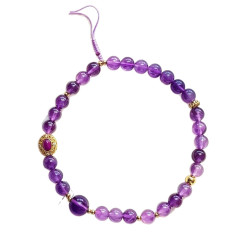


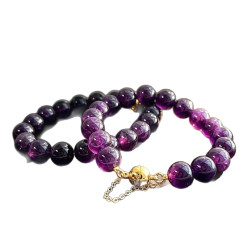
Natural Amethyst Beaded Phone Lanyard Strap
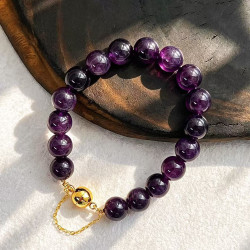
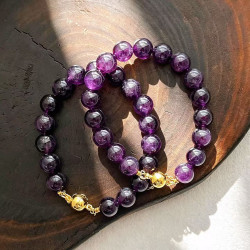


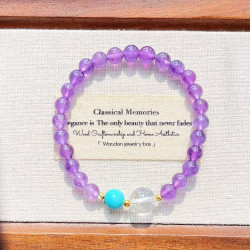


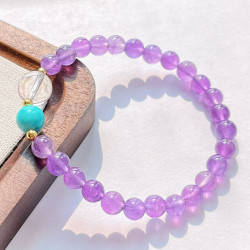

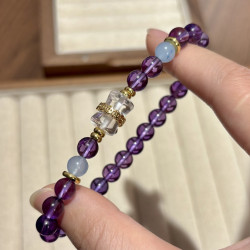
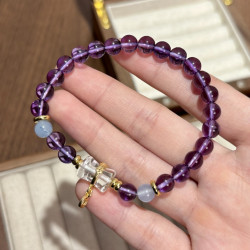
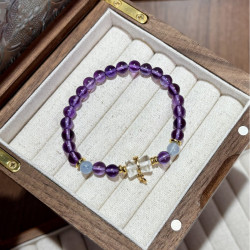
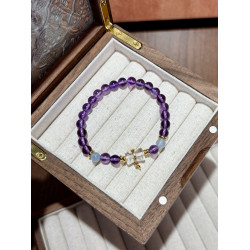
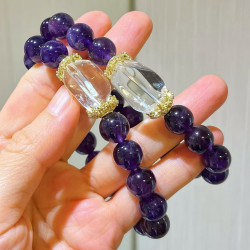
Natural Amethyst Clear Quartz Bracelet


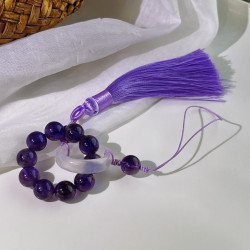


Natural Amethyst Tassel Phone Charm Bag Accessory