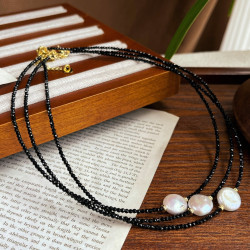
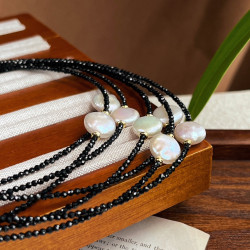
Clear Quartz
Clear quartz — rock crystal — is the benchmark gemstone. Pure SiO2, Mohs 7, colourless and transparent, and the material every other quartz variety is measured against. It is also the stone most often imitated by glass, so the guide below includes how to tell them apart.
The Reference Stone
Clear quartz is silicon dioxide with no significant colouring impurities: hexagonal prisms ending in pyramids, Mohs hardness 7, specific gravity 2.65, vitreous lustre, conchoidal fracture, no cleavage. It is piezoelectric and pyroelectric — the property that makes quartz oscillators work and which is the physical basis of much of its reputation. It is one of the most common minerals in the earth's crust and has been worked into beads and vessels since the Neolithic.
Why "Master Healer"
In crystal tradition clear quartz is treated as the neutral amplifier — the stone said to hold and direct intention rather than carry a colour-specific property of its own. That is exactly why it is the most common stone in a starter collection: it is meant to be paired with everything else. In astrology it is assigned variously, most often to all signs as a general stone, and specifically to Leo and Aries in some systems.
Telling Natural Quartz from Glass
- Temperature. Natural quartz feels noticeably cold to the touch and warms slowly; glass warms almost immediately.
- Inclusions. Natural quartz nearly always has some — bubbles are rare in nature but common in glass, so a perfectly bubble-free clear stone should raise suspicion.
- Weight. Glass used for imitation is often lighter; quartz has a specific gravity of 2.65 and feels dense.
- Edges. Molded glass beads have slightly rounded, soft edges; cut quartz has sharper ones.
Choosing a Form
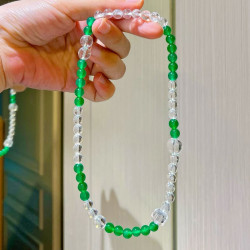
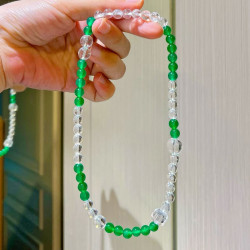
- Necklace — our most-stocked form. A clear strand layers well and does not compete with coloured pieces.
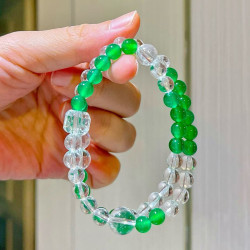
- Bracelet — durable and neutral; the classic first bracelet.
- Pendant — often a faceted point or a polished nugget.
- Earrings — small faceted drops catch light well.
Care
Warm water, mild soap, soft brush, ultrasonic safe. The one real hazard is thermal shock: do not move a cold quartz piece straight into hot water. Clear quartz can also fade if left in intense sun for long periods, though it is far more stable than amethyst.

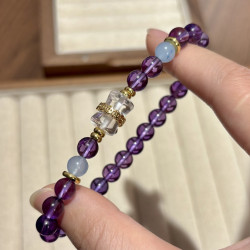

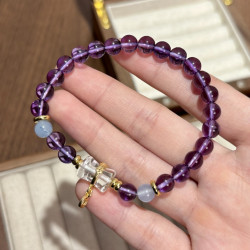



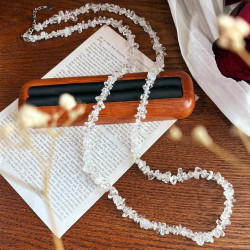
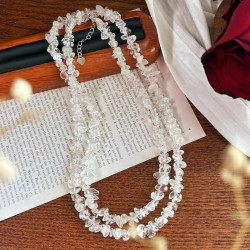

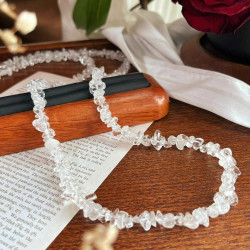

Clear Quartz Necklace
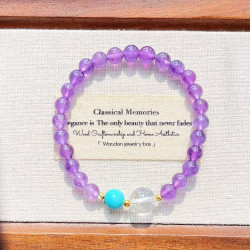


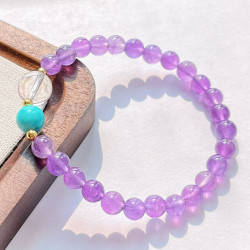

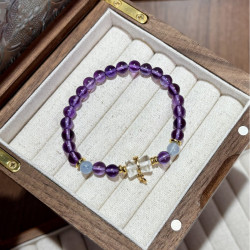
Natural Amethyst Clear Quartz Bracelet







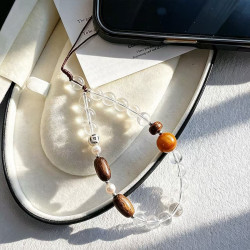


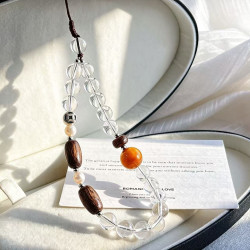
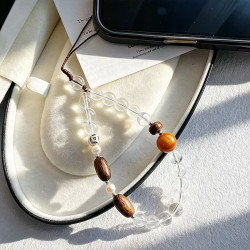


Natural Clear Quartz Rosewood Beaded Phone Lanyard Strap


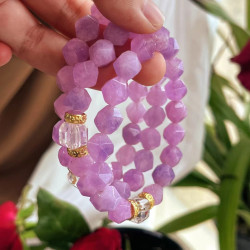

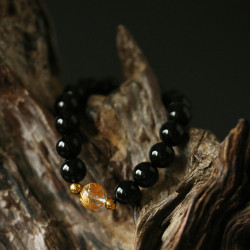
Natural Original Clear Quartz Quartz Jade Bracelet


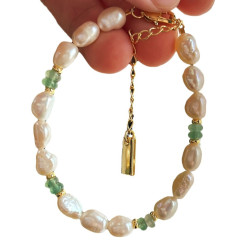
Natural Pearl Bracelet