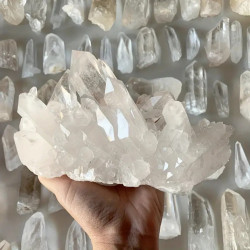
Selenite
Selenite is gypsum — calcium sulfate dihydrate — and it is the softest stone we sell at Mohs 2. We stock it because the pearly white glow is genuinely unlike anything else, but this page leads with the care rules rather than the romance, because selenite is the stone most often ruined by well-meaning advice.
What Selenite Is, Precisely
Selenite is the crystalline form of gypsum, CaSO4·2H2O. Mohs hardness 2 — softer than a fingernail (2.5) — and water-soluble. Those two facts govern everything about owning it. Most of the white, silky, fibrous material sold in jewelry and as "charging plates" is technically satin spar, a fibrous variety of the same mineral; true selenite is the clear, sheet-like form. Both are gypsum and both behave identically.
The name comes from Selene, the Greek moon goddess, for the pale transmitted light. Gypsum is one of the most common sedimentary minerals on earth — it is the main ingredient of drywall and of plaster of Paris, and food-grade gypsum is used in tofu making. It is entirely non-toxic.
The Care Rules, Stated Plainly
- Never put selenite in water. It dissolves. Even brief contact etches the surface, and repeated exposure pits it permanently.
- Never use ultrasonic or steam cleaners, and skip alcohol-based jewelry dips — most contain water.
- Keep it away from salt and humid air. Salt water attacks gypsum exactly as fresh water does, and a bathroom is the fastest way to ruin a selenite piece.
- It scratches with a fingernail. Store it separately, wrapped, away from quartz and metal.
- Remove before washing hands, swimming, or anything that makes you sweat.
Clean only with a dry, soft cloth.
Why We Still Stock It
Because in the right form — a pendant, an earring, a piece worn occasionally — selenite is spectacular and perfectly viable. It is the "cleansing" stone of crystal tradition, associated with the crown chakra, with mental quiet, and with the moon; in astrology it is usually assigned to Cancer and Taurus. Its reputation as a stone that clears other stones is a metaphysical convention, not a measurable effect, but it explains why selenite plates are so widely used.
How to Tell Real Selenite
A fingernail will scratch genuine selenite — which is also how to spot glass or howlite imitations, both harder. Thin sheets flex slightly before breaking. If a piece labeled selenite tolerates a damp cloth without any surface change, it probably is not gypsum.