Why Some Birth Chart Aspects Keep Ringing After They're Exact
By RedKnotr Editorial - 28/10/2026 - 0 comments
Eleven-fifty on a Sunday, redrawing the same two pencil lines
For about four years now, most Sunday nights have ended the same way. Somewhere around eleven-fifty, when the house has gone quiet and I should already be asleep, I take the envelope my birth chart is printed on from behind the tea tin, unfold it on the kitchen counter, and redraw two pencil lines. One is a square. One is a trine. I look at them for a minute, fold the paper, and go to bed.
I told myself for a long time that this was checking. It wasn't. On the Sunday I'm thinking of, a message from Thursday was still sitting open on my phone, and there was a band of tension under my collarbones that had arrived on Friday afternoon and never left. I wasn't checking anything. I was rehearsing a conversation I hadn't had.
What I noticed, eventually, is that one of those two lines was still moving and the other had already finished. That sounds like nothing at all. It changed how I read every page of my chart.
The birth chart aspects I had been reading as one thing
An aspect is an angle between two planets. A trine is roughly 120 degrees, a square 90, an opposition 180, a conjunction zero. Because planets are almost never at a perfect angle for long, astrologers allow a margin — the orb — usually somewhere between four and eight degrees depending on the aspect, the planets and the tradition. Inside the orb, the aspect counts. Outside it, it doesn't.
For years that was the whole of it for me: is this aspect in my chart or not. Which is a bit like asking whether a song is playing, without noticing whether you're hearing the first bar or the last.
Applying and separating aspects: the distinction the old books kept insisting on
Here is what I had skipped in every beginner book. Aspects are either applying or separating. An aspect is applying when the faster-moving planet is still travelling toward the exact angle — the orb is shrinking, the contact is approaching. It is separating when that planet has already passed the exact degree and is moving away, the orb widening again.
William Lilly, in Christian Astrology (1647), leaned on this constantly, mostly for horary questions: an applying trine between the two significators meant the matter would come to a conclusion, while a separating trine meant the chance had just gone past. Nearly four centuries later the logic still holds when you read your own chart. Applying aspects are generally given more weight because the energy is still building toward its peak. Separating ones are read as echo, aftermath, integration — real, but no longer gathering force.
A few refinements that took me a while to absorb:
- Mutual application. When both planets are moving toward each other — often because one is retrograde — the contact is considered the strongest of all. Two parties walking toward the same meeting point.
- The near miss. Sometimes the faster planet slows to station retrograde a degree or two short of exact, and the aspect never perfects. You get the idea, the conversation, the almost-connection, and then it slips past. I have a Mercury–Venus one of these, and it describes a lifelong pattern in my own speech better than any psychology book has.
- Orbs are not one number. Conjunctions and oppositions usually get six to ten degrees; trines and squares five to seven; sextiles four to six. The Sun and Moon get a little more room, the angles almost none, and transits are read tighter than natal placements.
- Not everyone weighs this. Plenty of good astrologers ignore applying and separating in natal work and read by orb tightness alone. I won't pretend there's consensus. But the distinction gave me something tightness alone couldn't.
What applying and separating birth chart aspects changed in my week
The first thing I did was childish, and it took fifteen minutes. On the back of that envelope, beside each aspect, I drew a small arrow: pointing toward its exact angle, or away from it. Applying or separating, all of them, in pencil, with the fridge humming behind me.
Then came the part that actually mattered. I took each aspect one at a time, held it in mind for three breaths, and noticed what my body did. The applying square felt like a held breath — pressure with somewhere to go. The separating trine felt flat, almost tired, like a room after guests leave. No book told me that. It was simply what happened when I stopped reading and sat still.
I wear a thin silver pendant most days, one of the simple pieces from the pendant collection at RedKnotr, and my thumb found its edge the whole time, the way you'd hold a coin while thinking. That isn't a technique. It's just where my hands go now.
A near-miss inventory
Next I wrote down three things I had stopped two degrees short of. A message I drafted and never sent. An application I abandoned at ninety percent. A conversation I opened and then closed again with a joke. Beside each, one line: what would two more degrees have looked like? Concrete, not poetic. The message would have been four sentences long. The application needed one reference. The conversation needed me to sit in three seconds of silence instead of laughing.
This is the part of astrology I trust least and use most. Not prediction — vocabulary. Calling something a separating aspect doesn't tell me what to do. It tells me which of two things I'm feeling, approach or echo, so I stop treating an echo as an emergency.
The ten-day echo log
For one separating aspect I kept a single line a day for ten days: the date, what I noticed, nothing else. What surprised me was that it didn't fade in a straight line. It went quiet for two days, came back hard on the third, went quiet again. The hard days were the ones I had slept badly. Whatever that aspect is, it turns up the volume when I'm tired. I would never have found that by reading.
What I do with this now, and what I don't
I still redraw the two lines on Sunday. But now I know which one is weather and which one is an echo, and that has cut my late-night rehearsing roughly in half. The Thursday message is still unanswered, by the way. I've stopped treating that as evidence of a stuck chart. It's a stuck Tuesday.
Frequently asked, honestly answered
Does a separating aspect mean the issue is finished?
Not in my experience. It means the peak has passed. What's left is the part nobody writes about — the sorting, the slow return to normal. If anything, separating aspects describe how I process things, while applying ones describe how I get into them.
Can an aspect be both at once?
Yes, and more often than the books suggest. A retrograde planet can make an aspect perfect, back away, and perfect it again. That's part of why some themes seem to arrive in three passes rather than one. If a pattern in your life shows up, leaves, and returns, look for a retrograde loop before you look for a lesson.
Do I need an exact birth time for this?
For planet-to-planet aspects, almost not at all; those barely move across a day. For anything involving the Ascendant or Midheaven you need a time accurate to a few minutes, because the angles move about one degree every four minutes. If your birth time is a guess, mark the angles as provisional and leave them out of the arrow exercise.
Is a wide orb worthless?
No, but I've learned not to let it outrank a tight one. A nine-degree trine is background tone. A one-degree square is the thing you'll be living with this month. Sorting by tightness first, then by applying or separating, gives me a much shorter list than the software does.
I'm not a doctor and this isn't medical advice. This is a reflective practice, not a diagnosis. If the band under your collarbones has been there for months, that's a conversation for someone with a stethoscope, not a chart.
Tags: applying aspects, separating aspects, birth chart aspects, astrology orbs
Related Pieces
View All →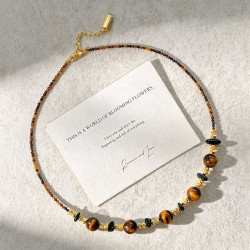






This content is copyrighted by its original authors. In case of any infringement, please contact us for removal.
Comments
Write a comment