The Smallest Shape I Ever Wore: A Season of Practicing With the Dot
By RedKnotr Editorial - 05/10/2026 - 0 comments
The rain had been coming down since Tuesday, and by Friday the window beside my desk was fogged to opal. Without deciding to, I drew a single dot in the condensation with my fingertip — and then sat there, oddly arrested by it, the way you stop when a word you've said ten thousand times suddenly sounds strange. One dot. The smallest thing my hand knows how to make. It stayed on the glass until the kettle boiled, and it has been quietly reorganizing my practice ever since.
What I got wrong about small shapes
I came to the study of shape and geometric energy the way most people do — from the big structures. Mandalas, labyrinths, the hexagon in the honeycomb, the golden spiral in the fern. My notebook for years was a parade of grand geometry. The dot never made the notebook. It seemed like the absence of shape, the way silence seems like the absence of music. It took a fogged window and a bored fingertip to make me look at the thing every one of those grand structures secretly begins with.
The bindu: the shape before shapes
When I finally looked it up, I found the dot had been sitting at the center of things the whole time — in several traditions, under the same name. In Sanskrit, bindu means point, drop, or seed, and the word reaches back to some of the oldest texts we have; the Rig Veda's hymn of creation uses it. In tantric and yogic traditions, bindu marks the point where creation begins and unity condenses into the particular — "the sacred symbol of the cosmos in its unmanifested state," as one line I copied into my notebook has it. Every mandala in that tradition is drawn outward from a central bindu: the whole architecture of circles, petals, and palace walls unfolds from one seed of ink.
The Tibetan traditions that inherited the mandala carry it further, and this is the part I keep returning to: in their meditative practice, the entire mandala — every gate and deity and ring of fire — is eventually dissolved back into the bindu at the center. The geometry is a ladder you climb and then let go. Even the dot itself dissolves, into bare awareness. And the tradition that wears the mark: the bindi on the forehead, linked in Hindu, Buddhist, and Jain practice to the ajna center, said to gather energy and steady concentration — a dot worn precisely where the gaze of a meditator settles.
The framework I teach and practice holds that ordered geometric structures form stable vibrational fields — that a shape's regularity is why it can hold a quality at all. By that logic the dot is the primal case: a boundary so small it defines a center and nothing else. A circle, I've come to think, is just a dot that learned to breathe.
Four ways I practice with one point
Practice one: three minutes with a single dot
I draw one filled dot, pea-sized, on white paper, and give it three minutes of soft gaze. That's the whole protocol. What happens is always humbling: within thirty seconds my eyes water or wander; I return, without commentary, and return again. This is one-pointed attention with training wheels — concentration practice stripped of every excuse for ambition. On the days my mind is loudest, the dot is the only shape small enough to sit still with.
Practice two: the wrist dot
I drew a dot on the inside of my left wrist with a fine pen, refreshed each morning. Not decoration — a return cue. Each time I noticed it during the day, one breath, one beat of remembering where my attention actually lives. By Thursday I was catching the drift of a dozen small spiraling thoughts a day. The dot on the glass did this first: it was a point my eye kept returning to, and return, I've decided, is the entire skill.
Practice three: growing a mandala from a seed
Once a week I place one dot in the center of a page and let lines grow outward from it for ten minutes — no plan, just radiating repetition. Beginning from the bindu changes the experience of the whole page: everything that appears is, structurally, the dot continuing itself. On the days I feel scattered, this is the practice that most reliably gives me back a sense of one thing leading to another.
Practice four: wearing a single point
For a season I've swapped my usual stacked pieces for one small pendant — a single round stone set alone, a dot worn at the sternum, which I picked from RedKnotr after the window morning. The difference against my old habits is stark: one point centers attention; a stack scatters it, however pretty the scatter. When I catch my hand rising to the pendant mid-meeting, that's the wrist-dot practice in nicer clothing.
Back to the window
The rain stopped a week ago. The dot on the glass is long gone, of course — condensation keeps nothing. But I notice I've started ending my journal entries with a single period drawn deliberately, slowly, instead of trailing off. A dot is a decision that something is complete. Perhaps that's why the smallest shape took me longest to study: you can't hide inside it. There's the center, and there's you, and the rain coming down. Nothing else was ever required.
Questions I get about practicing with the dot
Isn't a dot too small and simple to "do" anything?
That was my first objection too, and the practice answered it better than any argument: simple is the point, literally. Smallness is what makes it usable — you can hold a dot in attention completely, which you cannot do with a cathedral. In my experience, the smallest field is the steadiest one.
Do I need any religious framework for this to make sense?
No, and I try to be careful here: bindu, mandala, and bindi belong to living traditions, and I hold them with respect rather than as my property. What I practice is portable and old-adjacent: attention to a point, return to a center. If the Sanskrit resonates for you, learn it from its own teachers. If it doesn't, a period at the end of a sentence will teach the same lesson.
How is a dot different from a circle pendant?
A circle is a held boundary — protection, wholeness, a room with a wall. A dot is a held center — origin, focus, the seed before the wall. I wear the circle when I need edges and the dot when I need a place to return to. They're related the way a house is related to its hearth.
I keep losing focus during the three minutes. Am I doing it wrong?
Losing focus is the exercise; returning is the rep. I still wander a dozen times in three minutes, and some days the eyes never settle at all. The win isn't a blank mind — it's noticing you've left, sooner, with less drama. If you want a gentler on-ramp, trace the dot instead of gazing at it. I'm not a teacher of anything ancient, just a student with a notebook — but that much, I'd sign my name to.
Tags: bindu, dot symbolism, geometric energy, sacred geometry
Related Pieces
View All →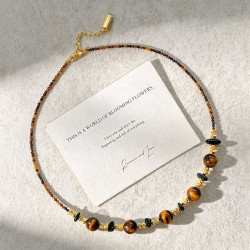


You May Also Like
All Articles →


This content is copyrighted by its original authors. In case of any infringement, please contact us for removal.
Comments
Write a comment