The Planet That Runs My Whole Chart, and the Years I Spent Starting Somewhere Else
By RedKnotr Editorial - 05/10/2026 - 0 comments
The Woman With the Printout Asked Which Symbol Was Hers
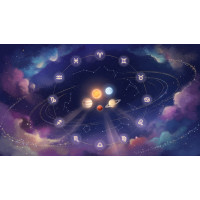
The question came at the end of a reading, from the friend who had come along, not from the client. She was holding the printout — a circle with thirteen symbols in it — and she wanted to know which one was hers. I had just spent forty minutes on her Sun, her Moon, her Saturn, in that order, the way I had been taught. I pointed at the Sun. Then I stopped, because that wasn't what she was asking. What she wanted was the chart ruler: the planet that rules the sign on her ascendant, the one that carries the whole chart's style out into the world. Her rising sign was Virgo. So the answer was Mercury, and I had reached Mercury at minute thirty-eight.
I have thought about that pause a lot — not because I got the astrology wrong, but because she asked for the driver and I handed her a description of the car.
For Years I Read Charts From the Sun, and They Came Out as Lists
Nobody taught me to do that exactly. Reading from the Sun is easy to teach and easy to examine; starting from the ascendant is messier, because it needs a birth time to the minute and half the people who come to you don't have one.
So I read Sun, then Moon, then whatever planet was loudest. My readings were accurate and slightly inert: I could describe a person beautifully and then have nothing to say about why they kept ending up in the same kind of room, with the same kind of boss.
The turn came from a teacher I only studied with twice. She said it in passing, and I wrote it inside the cover of a notebook: the Sun tells you what a person is made of, the rising sign tells you how they get in the door, and the ruler tells you who is driving. I nodded. It took me another two years to actually read that way.
What the Chart Ruler Is, in Plain Terms
Here is the whole mechanism, and it is genuinely this simple: find the sign on your ascendant, then find the planet that rules that sign. That planet is your chart ruler. It is not chosen because it is the strongest planet in the chart, and it is not your Sun unless you happen to have Leo rising.
The traditional rulerships, which is what I use because I also use techniques that depend on them:
- Aries, Scorpio — Mars
- Taurus, Libra — Venus
- Gemini, Virgo — Mercury
- Cancer — the Moon
- Leo — the Sun
- Sagittarius, Pisces — Jupiter
- Capricorn, Aquarius — Saturn
Modern schools give Scorpio to Pluto, Aquarius to Uranus, Pisces to Neptune. Pick one system and stay inside it; a chart read with mixed rulerships has two drivers and no steering wheel.
Why the Chart Ruler's House Matters More Than Its Sign
Once you have the planet, you look at where it sits. The sign describes how it operates. The house describes where the effort keeps going. Cancer rising with the Moon in the fourth and Cancer rising with the Moon in the tenth are the same front door opening onto completely different lives — one person keeps being pulled back into the family kitchen, the other keeps getting pulled onto a stage.
This is the part of psychological astrology that earns the word psychological. A placement is not a trait. It's a place where attention keeps returning, whether or not you agreed to it. Aspects then tell you who else is in the room with the driver: a conjunction is someone standing very close, a square is friction that keeps the subject on the table, a trine is help that arrives so easily you forget to count it, an opposition is a person across the table you keep negotiating with.
One caution, because I made this mistake for a year: the chart ruler is one lens, not the whole camera. It can't cancel the Sun, the Moon, a stellium, or an angular planet. It organises the reading. It doesn't replace it.
Four Things I Do With It Now
1. Say it out loud in one sentence
Before I look at anything else I write a single line in my notebook: my chart ruler is Mercury in the sixth house. Then I say it, quietly, out loud. The first time I did this I felt absurd. The second time I noticed something in my chest drop about a centimetre — the sensation of a sentence landing rather than passing through. A sentence with a place in it is easier to feel than a list of qualities.
2. The plot test
Next I check the sentence against the last three years. Not whether it flatters me. Whether it predicts the rooms I have actually been in. When I did this with my own chart, the ruler's house described, with uncomfortable precision, the thing I had been calling a detour. I sat with that for a week before I told anyone.
3. A week of tallying the house
For five days I marked every hour that belonged to my ruler's house — not the time I thought I was spending, the time I actually spent. By Thursday the pattern was embarrassing in the way that useful patterns usually are. Most of what I called "obligation" was a choice I kept re-making.
4. Reading the aspects as a conversation
Instead of "Venus square Saturn," I write who is talking to whom and about what. "Venus wants something soft. Saturn keeps asking what it will cost." It sounds like a parlour trick. It also gets me to the actual question faster than adjective-matching, because a conversation has more than one side and a trait does not.
What I Still Get Wrong
I overuse it. When I'm tired, every chart starts to look like a chart-ruler story, and I have to remind myself that the person in front of me is not a diagram with a favourite planet. I also catch myself turning the house placement into a verdict — so that's why you keep doing this — which is not a reading, it's a sentence handed down. The distinction I try to keep: a chart describes where attention goes, not what a person is allowed to become. I'm not a therapist and this isn't diagnosis.
The object I use for this is almost too plain to mention: a small silver pendant on the same chain as my house keys. I touch it before I make a decision — not for the planet, but because it's the one thing my hand is always on. Mine is from the pendant range here, and it has become the physical version of that one-line sentence: a fixed point I check before I move.
Back to the Printout
I saw the woman with the printout again about a year later. She told me she had looked up Mercury and laughed, because Mercury in her chart sat in the house of daily work and she had spent a decade insisting she was not a person who cared about work. I didn't say anything wise. I just noticed that she said it lightly, the way people say things they've already stopped arguing with. That's usually the whole result. Not a revelation. Just the argument ending.
FAQ
Do I need my exact birth time?
For the chart ruler, yes — the ascendant moves about a degree every four minutes, so a birth time off by half an hour can put a different sign on the door and hand you the wrong planet. If you don't have a time, I'd rather work with the Sun and Moon and say plainly that the ruler is unknown. A guessed ruler is worse than none, because you'll build a story on it.
Traditional or modern rulerships?
Pick one and stay in it. I use traditional because the timing techniques I trust were built on seven visible planets. If you prefer Pluto for Scorpio, that's coherent too. What isn't coherent is switching systems when the other answer is more flattering.
Is the chart ruler my strongest planet?
Almost never, and this is the mix-up I hear most. It's the planet that rules your rising sign, full stop. It can be weak by dignity, buried in a cadent house, and still be the one holding the chart's orientation. A manager can be bad at their job and still be the manager.
What if my chart ruler is somewhere I don't like?
Then you've found the place you keep getting sent, which is information and not a punishment. A twelfth-house ruler doesn't mean hiding; it means the work happens out of sight, and the person who knows that stops being surprised by how much of their life is invisible to other people. I've never seen a placement improve by being argued with. I have seen it become workable once it's named.
Tags: chart ruler, rising sign, psychological astrology, ascendant
Related Pieces
View All →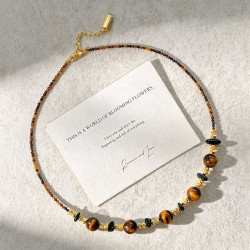


You May Also Like
All Articles →
This content is copyrighted by its original authors. In case of any infringement, please contact us for removal.
Comments
Write a comment