Steam Is the Quiet Thief: A Humidity Map for Crystals and Crystal Jewellery (November 2026)
By RedKnotr Editorial - 31/10/2026 - 0 comments
The Bathroom Is a Weather System
Most people choose where to keep a crystal pendant by convenience, and convenience usually points at the bathroom shelf. It is the one room where you take jewellery off, so it becomes the room where jewellery lives. This is also the room with the widest humidity swings in the house, the highest concentration of cosmetics and cleaning chemicals, and the most frequent temperature changes. In material terms, it is close to the worst room available.
None of this produces dramatic damage. That is exactly the problem. Humidity works by increments: a slow dulling, a faint cloudiness, a metal that darkens months earlier than it should, a cord that gives way without warning. By the time it is visible, the cause is usually two years in the past.
Hardness Is Not Water Tolerance
The most common piece of crystal advice is to sort by Mohs hardness, which is genuinely useful for scratches and almost useless for moisture. Hardness measures resistance to being scratched, not resistance to dissolving, hydrating or reacting. Two stones can both sit at a comfortable hardness and behave completely differently in a steamy room.
The stones that most reliably suffer from moisture are the soft, porous or water-soluble ones: selenite, halite, lepidolite, and anything in the calcite family. Selenite in particular is often sold as a cleansing stone and placed near water in cleansing rituals, which is a reliable way to ruin the surface. Pyrite and hematite are not soft, but they tarnish or rust readily in damp air, and once the surface has started, polishing only removes the evidence temporarily.
There is a useful exception at the other end. Opal and pearl are traditionally described as preferring some ambient humidity; storing them with a drying agent for months can be worse than leaving them in a normal room. This is why the rule "keep everything dry" is too blunt. The honest version is: know your mineral before you decide which direction to protect it in.
Metals Fail Before Stones Do
On a pendant, the stone is rarely the first component to show strain. Sterling silver contains copper, which reacts with sulphur compounds in the air and darkens; gold plating wears at the points of contact and exposes the base metal underneath; elastic cord absorbs moisture and loses tension. A pendant stored in a bathroom can look fine for a year and then fail at the clasp or the cord, which is the part nobody inspects.
Practically, this means the storage question is not only about the stone. It is about the assembly: the finding, the chain, the cord, the glue, the setting. Those are the parts with the shortest lifespan in humid air.
Light Is the Other Quiet Thief
A windowsill is the second-most-popular storage choice and has its own failure mode. Several widely used stones are light-sensitive: amethyst fades toward grey or pale yellow, rose quartz loses saturation, citrine can shift, and kunzite is famously unstable in strong sun. Ordinary window glass filters some ultraviolet light but not enough to protect colour over months. If a piece is displayed in direct sun because it looks beautiful there, rotate it and accept that the display is consuming the colour.
This is worth stating plainly because it contradicts a popular practice. Leaving crystals in sunlight to "charge" them is a modern habit with real material cost. Moonlight, or simply a shelf out of direct sun, does the symbolic job without the fading.
Thermal Shock and Soap Scum
Wearing jewellery into a hot shower exposes it to two things at once: a rapid temperature change and a soap film that settles into every setting and drilled hole. Thermal shock matters most for stones with inclusions or existing micro-fractures, where expansion happens unevenly. Soap residue matters for everything, because it dulls the surface and traps dust, and the usual response, scrubbing with toothpaste or bicarbonate, adds microscopic scratches on top of the film.
The habit that prevents most of this is simple and slightly annoying: jewellery goes on last, after lotion and perfume, and comes off first, before washing. One rule, applied daily, outperforms any cleaning routine.
Three Dry Zones
Rather than one storage place, think in zones. A bedroom drawer lined with soft fabric is the default for daily pieces: dark, dry, and away from radiators. A closed cabinet in a living area works for display pieces that you want to see. A padded travel case handles the third zone, which is anywhere else. The bathroom is not a zone; it is a transit area, and pieces should pass through it rather than live there.
If your climate is genuinely humid, a small silica packet in the drawer is reasonable, provided it does not sit against opal or pearl and is replaced when saturated. Do not seal a damp stone into a container. Dry it completely first, then store it.
Fifteen Minutes, Once a Season
Twice a year is enough for maintenance if you do it properly. Take everything out, look at it in daylight, and check four things in order.
- Surface. Any new cloudiness, chalky patch or dull spot, especially on soft stones. That is moisture, not wear.
- Metal. Darkening at the clasp, thinning at the jump ring, plating worn at the edges. These fail before the stone does.
- Cord. Fraying near the knot, stretched elastic, a slightly hairy texture. Replace rather than wait.
- Colour. Compare against how you remember it. Uneven fading means light exposure, and the fix is positional.
Then put everything back in a dry zone, separated by hardness so that quartz is not resting against fluorite or selenite. Fifteen minutes twice a year is a smaller commitment than replacing a favourite piece.
If you are choosing a first piece to wear daily, it is worth picking one whose assembly suits your habits rather than your intentions. RedKnotr's pendants are built for everyday wear, which makes the care routine shorter, not longer.
FAQ
Can I keep crystals in the bathroom if they are only decorative?
You can, but expect accelerated wear on any metal components and on soft or porous stones. If the piece matters to you, move it to a bedroom drawer and keep a hardy quartz or agate in the bathroom instead.
Does water cleanse or damage a crystal?
Both, depending on the mineral. Quartz and agate tolerate brief rinses; selenite, halite and many calcites do not. Physical care and symbolic cleansing are separate questions, and it helps to answer the mineral one first.
How often should I replace an elastic cord?
With daily wear, most cords last somewhere between six and eighteen months. Humidity, perfume and tension shorten that. If it feels slack or looks furry near the knot, replace it before it decides for you.
Is sunlight bad for all crystals?
No. Many stones are unaffected. The well-known sensitive group includes amethyst, rose quartz, citrine and kunzite. When in doubt, an indirect shelf is the safer default.
Tags: crystal care, crystal storage, humidity damage, jewellery maintenance
Related Pieces
View All →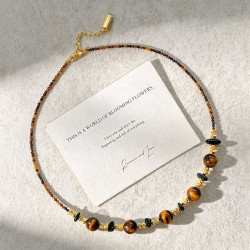


You May Also Like
All Articles →

This content is copyrighted by its original authors. In case of any infringement, please contact us for removal.
Comments
Write a comment