The Ladder Dissolves at the Top: A Working Crown Chakra Practice for November 2026
By RedKnotr Editorial - 30/10/2026 - 0 comments
The Last Centre in the Sequence
Of the seven centres, the crown is the one most often described in language that resists use. It is called the thousand-petalled lotus, the seat of unity, the place where individual awareness meets something larger. Beautiful, and almost impossible to act on. So people skip it, or they approach it as an achievement to unlock after the other six are tidy, which in practice means never.
A more workable framing, and one many teachers now prefer, is that Sahasrara is not the top rung of a ladder. It is what happens when you stop climbing. The practice is less about opening something and more about removing the noise that keeps the view narrow.
What the Tradition Actually Assigns to It
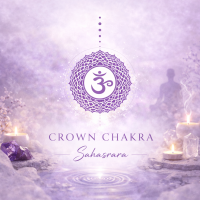
In the classical descriptions, sahasrara sits at or just above the crown of the head. Its colour is violet or white; its element is sometimes given as thought or consciousness, sometimes left empty because the centre is said to be beyond the physical elements; its sound is either the mantra OM or, in some lineages, silence itself. The thousand-petalled image matters: a thousand is not a count, it is a way of saying the centre cannot be finished.
Practitioners describe a balanced crown as spaciousness rather than bliss: the capacity to hold several perspectives without losing your own, a sense of meaning that does not collapse when plans do, and curiosity about things you cannot control. That is a modest and testable description, which is why it is more useful than enlightenment talk.
Two Ways to Be Out of Balance
The crown is usually described as underactive or overactive, and the second category is the one people rarely examine in themselves.
- Underactive. Cynicism dressed as realism. Rigid thinking, an exhausting need for everything to be explainable, a flat sense that nothing means much, and a private suspicion that everyone else is pretending. The tell is not sadness; it is contempt.
- Overactive. Spiritual bypassing. Using elevated language to avoid a difficult conversation, a debt, a diagnosis or a grief. Dissociation that feels like transcendence. Being extremely wise about other people's lessons and unavailable for your own.
Both patterns are attempts to manage the same discomfort. One refuses the sky; the other refuses the ground.
Why Grounding Comes First
Every serious source on crown work says the same thing in different words: build from the bottom. Without a sense of safety in the body, expansion becomes ungrounded; without emotional honesty, spirituality becomes avoidance; without a functioning sense of self, selfless service becomes self-erasure. This is not a moral hierarchy. It is a structural observation. A centre that governs connection is only as stable as the connections beneath it.
So the first question before any crown practice is unromantic: am I sleeping, eating, and telling the truth about at least one thing? If not, that is the practice for this week.
Four Practices That Hold Up
1. Ten minutes of silence, with no soundtrack
Sit upright, eyes closed or softly downcast, and do nothing in particular. Not a guided meditation, not music, not a timer with a soothing voice. Silence is the traditional sound of this centre, and the discomfort of the first five minutes is the information. Most people discover they have been using input to avoid a thought. Ten minutes is enough to find out which thought.
2. One opinion, and its opposite, held honestly
Choose something you believe with mild conviction, not your deepest political commitment. Spend five minutes stating the strongest version of the opposing view without irony. This is the most effective anti-rigidity exercise available, and it works precisely because it is uncomfortable. The crown, in practice, is the ability to be changed by a good argument.
3. Sky, not scenery
Go outside and look at a wide sky for three minutes, ideally at dusk. Not at your phone, not at the horizon line, but up. Vastness is not a metaphor for the nervous system; it changes the scale at which problems are held. In November, with early darkness, the sky is unusually available.
4. Service without an audience
Seva, in the tradition, is service offered from the recognition of connection rather than from pity or duty. The practical version is small: do one useful thing this week that nobody will know you did. Not performative generosity, which is another form of visibility, but the quiet kind. It is the most reliable antidote to a crown that has floated too high.
Stones as Cues, Not Currents
Crystals are best understood here as tactile reminders rather than transmitters. A piece of amethyst, clear quartz or selenite kept where you will see it before your silence practice becomes a cue that the ten minutes have started, in the same way a particular chair becomes a cue for reading. Many people find that the stone's usefulness is almost entirely in this associative role, and that is enough. Selenite, it is worth noting, is water-soluble, so keep it away from the bathroom and from anything wet.
If you prefer the reminder to travel with you, a pendant worn at the sternum rather than at the throat tends to sit below the crown and above the heart, which is a reasonable place for a symbol of perspective. RedKnotr's crystal necklaces are made with this everyday use in mind.
A Seven-Day Sequence
One week, one small commitment per day. Keep it boring; boring is what makes it survive.
- Day 1. Ten minutes of silence. Note the first thought that arrived and the last one before you stopped.
- Day 2. The opposite-opinion exercise, five minutes. Write one sentence you did not expect to write.
- Day 3. Three minutes of sky after dark. No phone in hand.
- Day 4. One unannounced act of service. Tell nobody, including the internet.
- Day 5. Re-read your notes from days one to four. Which of the four felt most like avoidance?
- Day 6. Repeat the one that felt most like avoidance.
- Day 7. Rest. No practice. Notice whether the week changed the quality of an ordinary conversation.
That last instruction is the assessment. Crown work that does not improve how you speak to people is probably just a hobby.
FAQ
Do I need to balance the lower six chakras before working with the crown?
You need a baseline, not a certificate. If you are sleeping badly, in an unsafe situation, or avoiding a conversation you know matters, address that first. Otherwise, gentle crown practices are safe alongside work on the other centres.
Is an overactive crown chakra really a problem?
Practitioners say it can be. The pattern to watch is using spiritual ideas to sidestep ordinary responsibilities or grief. If your practice makes you less available to the people you live with, that is the signal.
Which crystal is traditionally associated with Sahasrara?
Amethyst and clear quartz are the most common, with selenite and white howlite also cited. Tradition holds that these support the centre symbolically; many people find their real value is as a consistent visual cue for practice.
How long before I notice anything?
Most people notice a change in the quality of attention within two to three weeks of daily ten-minute sits, and almost nobody notices anything from occasional long sessions. Consistency is the entire mechanism.
Tags: crown chakra, Sahasrara practice, chakra balance, spiritual grounding
Related Pieces
View All →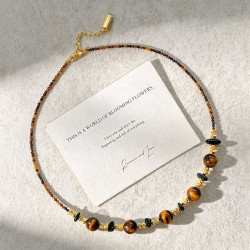




This content is copyrighted by its original authors. In case of any infringement, please contact us for removal.
Comments
Write a comment