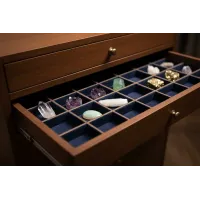
On November 2nd, at 4:40 in the afternoon, I noticed the light on my crystal shelf had changed. Not the crystals — the light. The sun now comes in at an angle so low it hits the second shelf instead of the first, and by 5:15 the whole window is gray. I've kept stones on that sill for years, and every November they quietly rearrange my routines without asking. This year I decided to actually watch the season move across them, one stage at a time.
Early November: the light got lower and my amethyst crystal sulked
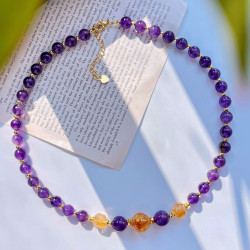
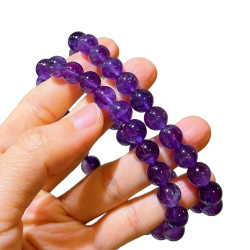
The first thing I noticed was color. My amethyst cluster, which sits closest to the window, had gone noticeably paler on the sun-facing side after a summer of direct light. Amethyst is one of those stones that fades with prolonged sun exposure — the purple can wash toward gray, and in my experience it doesn't come back. The physical layer of crystal energy starts here, in the actual material: light, heat and moisture do real things to real minerals, which is why the older care guides treat placement as practice.
What I did: rotated the cluster a quarter-turn away from the direct beam, and now the low November light grazes it instead of striking it. One small habit worth keeping: every time I move a stone for its own protection, I look at it for a moment first. It sounds like nothing. It's how I notice everything else.
A lamp on a tray with a towel within reach — November's arrangement, learned the hard way
The heating came on and my salt lamp started to sweat
Second stage of the season: the radiators kicked in and, a week later, my salt lamp was beading water down its side like it was crying. My first thought was that I'd bought a fake. The opposite turns out to be true — salt is hygroscopic, it pulls moisture straight out of the air, and when the heating cycles on and off in a cold snap, the absorbed water shows up on the surface. A resin imitation stays bone dry. The sweating, unsettling as it was, quietly proved my lamp is actual rock salt from somewhere very old.
The care routine I landed on, mostly from the lamp's own behavior: keep it lit several hours a day so the bulb's warmth drives the moisture back out, keep it off the cold windowsill and away from the kettle steamer, and give it a tray underneath. Wipe with a dry cloth, never a wet one. In this tradition the lamp is a hearth stone — but the physical layer comes first, or there's no lamp left to symbolize anything.
First frost: the crystals went cold in my hand
The first hard frost arrived on the 19th, and the sill stones were noticeably colder than the room. Stone conducts heat away from skin faster than the air does, which is why it always feels cool even in a warm house — the same reason a "cool to the touch" test has traditionally been used to tell real stone from glass and plastic. I'll be honest about the limits: that wrist test measures thermal conductivity, not magical authenticity, and clever fakes can pass it. But holding a cold stone until it warms to my skin temperature has become a small November meditation anyway. Two minutes, one stone, no phone. The crystal's psychological layer — the calming, single-point focus of holding something that asks nothing of you — works fine at any temperature. Some days I time it with the salt lamp's glow instead of a clock; the whole sill becomes one small, unhurried apparatus. What I've stopped doing is narrating the experience to myself while it happens. The first week I kept mental commentary running — "now the stone is warming, now I feel calmer" — and the practice stayed thin. Dropping the commentary was when holding a cold crystal started doing whatever it is cold crystal holding does.
The dark afternoons: crystal rituals moved earlier with the moon
Last stage: by late November the moon is up before I finish dinner, so the monthly moonlight-cleaning ritual quietly moved from midnight to the evening. I've simplified it this year — one full-moon evening, the whole tray on the sill, dry cloth first, then a night of lunar light. In this tradition, that's the ritual layer: the intentional act that turns maintenance into meaning. Winter narrows the days, and the narrowed days have made the practice feel less like superstition and more like keeping an appointment with the season itself.
What I plan for the rest of winter: keep the amethyst turned from the beam, keep the lamp lit on dark afternoons, and let the frost keep timing the rituals. If you want to try a seasonal version of this, start with one stone and one window, and just watch what December does to them — the shelf will tell you what it needs, some days more honestly than your calendar does. The little salt lamp I use is one of the hearth-style pieces from RedKnotr; the tray underneath it has done more for my peace of mind than the lamp's glow ever did.




This content is copyrighted by its original authors. In case of any infringement, please contact us for removal.
Comments
Write a comment