Third Eye Chakra and My Overthinking Brain: Notes From Someone Still Practicing
By RedKnotr Editorial - 09/10/2026 - 0 comments
A friend said it to me over noodles, not unkindly: "You know you've asked me the same question four different ways." She was right. I'd spent the whole lunch turning one small decision over like a stone in my pocket — the pros list, the cons list, the what-if-I'm-wrong list. And the strange part was that underneath all that circling, I already knew what I wanted. I had known since the second day. My mind just didn't trust the knowing.
That dinner is where my notes on the third eye chakra actually begin — not with a meditation cushion, but with the specific exhaustion of a brain that thinks in loops.
Ajna, the command center, read through an overthinking life
In the chakra tradition, the sixth energy center sits between the eyebrows and is called Ajna — usually translated as "perception" or "command." Its color is indigo, its element is light, and in the old texts it's linked with the eyes, the brow, and the deeper rhythmic machinery of the brain. The seven chakras work as a living map of needs — safety, feeling, will, love, voice, insight, connection — and Ajna is the need to see clearly: both the outer situation and one's own inner signal.
When this center runs low, in my experience and in most descriptions of the tradition, life feels foggy. Decisions stall. You ask four friends the same question. You outsource your seeing. But there's a less-talked-about imbalance on the other side: too much third eye with too little grounding, which shows up as living entirely in the head — brilliant ideas, zero contact with the body, intuition drowned in speculation. I have been both. Usually in the same week.
The distinction that actually helped me
The most useful thing I've learned from this practice is how to tell anxious thought from intuition. In the tradition's terms, both speak through the same inner eye; they just sound nothing alike.
- Anxiety is repetitive, loud, and future-catastrophizing. It says "what if" seventeen times and demands an answer now.
- Intuition, in my experience, is singular. It says something once, calmly, and doesn't argue when I ignore it. It feels like a quiet bell, not an alarm.
That matches what many long-time practitioners describe: fear tightens, insight opens. When I hold a decision in mind and my forehead, jaw and chest all clamp down, that's usually the alarm. When the same decision produces a flat, steady, slightly boring sense of "that way," that's usually the bell. Not infallible. Just much more reliable than my loop-machine.
Four small practices, honestly reviewed
- Candle gazing, five minutes. Trataka is an old yogic purification practice: gaze at a candle flame without straining, then close the eyes and rest attention on the after-image between the brows. The first week my eyes watered and my grocery list kept intruding. By the third week the pause after closing my eyes had gotten noticeably quieter. This is the most "classical" of the four and still the one with the clearest effect on my mental noise.
- The indigo pause. When a decision loop starts, I stop, breathe out slowly, and picture a small sphere of deep indigo light between my brows — not forcing an image, just a dark velvet glow. Then I ask once, "Fear, or truth?" The question alone often ends the loop. Some days it doesn't, and I get up and wash dishes instead.
- The intuition ledger. A small notebook where I write hunches as they arrive, then check them later, without drama. Three out of ten accurate is a normal month for me. The point isn't a score; it's that my logical mind finally got evidence that the quiet voice is worth consulting at all.
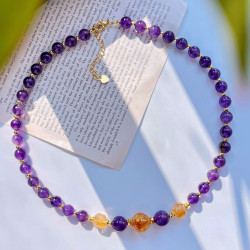
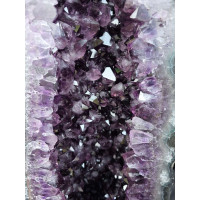
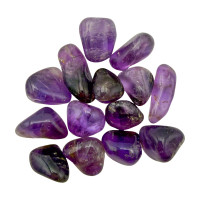
- Pairing with the root. Anything third-eye needs grounding to stay sane. After every brow-centered session I stand up, feel my feet, and touch something solid. I also keep a small amethyst on the desk — the stone the tradition hands to this chakra — with a tiny heart-shaped piece I found on redknotr.com. Whether it's mineral or memory, holding something dense keeps me from floating off into my own fog.
Still practicing
Overthinking hasn't left me, and I've stopped waiting for it to. What changed is the distance. The loop starts, and now there's usually a beat where I can recognize it — "ah, the four-questions voice" — before I follow it around the block. That beat is, as far as I can tell, what people mean when they talk about this chakra opening. Not visions. Not psychic fireworks. Just a little more space between the signal and the noise, and the growing willingness to trust the quiet bell at least once a day.
If your mind also runs laps, you might try the ledger before anything else. It's the least mystical of these practices and the one that convinced the skeptic in the room — who was, of course, me.
FAQ
Do I have to believe in chakras for any of this to work?
I don't think so. Candle gazing is a focus exercise; the pause-before-reacting is attention training. The chakra map just gives the work a location and a story. In my experience the map helps, but the breathing works even on skeptical days.
How do I know it's intuition and not just wishful thinking?
The ledger is my honest answer. Write the hunch, check it later, look at your own data. Wishful thinking usually fails that audit quickly, and the real signal — quiet, singular, unarguing — survives it.
What if I feel pressure or tingling between my brows?
Many people report it; I do too during longer sessions. I treat it as attention gathering in one place, not as a goal. If it ever tips into headache, that's my cue to ground and shorten the practice.
Can you overdo third eye work?
Yes, and I have — too much visualizing, not enough sleep or food or walking, and the fog gets worse, not better. Balance it with plain physical life. This tradition, like every contemplative one I know, works best with both feet on the floor.
Tags: third eye chakra, Ajna, overthinking, intuition, amethyst
Related Pieces
View All →

You May Also Like
All Articles →
This content is copyrighted by its original authors. In case of any infringement, please contact us for removal.
Comments
Write a comment