Where It Came From: Reading a Crystal's Provenance Label Without Buying the Story (November 2026)
By RedKnotr Editorial - 17/11/2026 - 0 comments
Every crystal label is trying to tell you three stories at once: where the stone formed, what has been done to it since, and who handled it on the way to the shelf. Most of us read none of them carefully - the purple is pretty and the phrase "ethically sourced" does the rest. This article is about reading those labels the way a mineralogist and an honest shopkeeper would.
The Country Is the Floor, Not the Story
Country of origin is the minimum useful information a seller can give. It is not the ceiling. Two pieces of the same mineral from different countries can form under different geological conditions, move through different supply chains, and carry very different costs for the people who dug them up.
The amethyst test: Brazil versus Uruguay
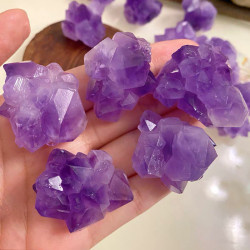
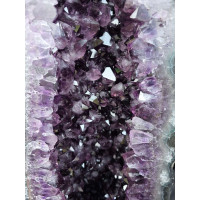
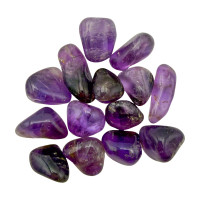
Take amethyst. The great South American deposits sit in the same volcanic rock formation - the Paraná basalt province - yet Brazilian material, mostly from Rio Grande do Sul, tends to be lighter and more variable in colour, with larger geodes and longer points. Uruguayan amethyst, much of it from the Artigas region, is typically darker, more uniform and denser, forming in smaller, tighter geodes. Uruguay's mining sector is also smaller and more formally regulated, which is part of why its material often costs more per kilo. Same mineral, same continent, two different stories - and a label that just says "amethyst" tells you none of it.
The Grading Myth: What AAA Actually Means
Unlike diamonds, decorative crystals have no independent grading body. AAA on a shop label is the seller's own scale, and it means whatever that seller decided it means - colour saturation for one shop, clarity for another, the absence of chips for a third. It is not a lie; it is not a standard either. The useful question is not "is this AAA?" but "what does your AAA measure?" A seller who can answer in one specific sentence is worth listening to.
Treatments Are Normal - Silence Is the Problem
Three treatments are everywhere in the market. Most commercial citrine is heat-treated amethyst: iron-bearing quartz heated until the purple shifts toward yellow, a legitimate and long-practised technique. Natural citrine is comparatively rare - the Anahí mine in Bolivia is often cited as a principal source. Much of the inexpensive "turquoise" on the market is dyed howlite or magnesite. And the vivid rainbow of "aura" quartz is a coating applied in a lab. None of this makes a stone fake. What it makes essential is disclosure: a heated stone honestly labelled is a fair purchase; a heated stone sold as natural is not, whatever its colour.
The Hard Part: Who Dug It Up
Then there is the part of the label nobody prints. Madagascar supplies a large share of the world's rose quartz, amethyst, citrine and labradorite, and reporting from the country has documented artisanal miners earning a few dollars a day, widespread child labour in the mining sector, and deaths in collapsing pits. The phrase "ethically sourced" has no universal legal definition in the decorative crystal trade and no independent certifying body - each shop defines it for itself. This is not a reason for guilt; it is a reason for specificity. Vague badges are worth little. Named regions, named partners and disclosed limits are worth a great deal.
Four Questions Worth Asking
- Where exactly - country, and ideally region or mine?
- Has it been dyed, heated, irradiated, stabilised or coated?
- Who did you buy it from - a cooperative, a family operation, a broker?
- What can you not verify? An honest "we don't know" is worth more than a confident badge.
Lab-grown quartz deserves a mention here: it has no mining impact at all and is a legitimate choice for buyers who care more about the object than the geology. Fair sourcing usually shows up as a modest price premium - often cited at around twenty to fifty percent - while extreme premiums are more often marketing than ethics.
At RedKnotr we would rather tell you what we know and what we do not. You can see how we describe our pieces at redknotr.com.
Frequently Asked Questions
Does origin change how a stone works?
Tradition holds that deposits differ in character, and many practitioners feel the difference. What can be verified is geology: chemistry and formation conditions do vary by locality. Choosing by origin works best with both - the verifiable facts and your own response to the stone.
Is heat-treated citrine fake?
No. Heating is a traditional and honest treatment, as long as it is disclosed. The problem is never the treatment; it is the silence around it.
How can I tell if ethical claims are real?
Ask for specifics: a named region, a named partner, disclosed treatments. Sellers who volunteer their limits are usually the ones actually doing the work.
Is expensive always more ethical?
Not always. Well-regulated origins cost more, but price alone proves nothing in either direction - cheap can hide exploitation, and expensive can hide marketing. Specifics beat price tags.
Tags: crystal provenance, crystal sourcing, amethyst, crystal care
Related Pieces
View All →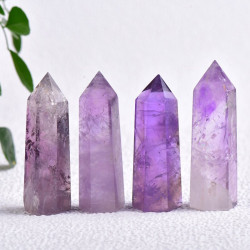

You May Also Like
All Articles →
This content is copyrighted by its original authors. In case of any infringement, please contact us for removal.
Comments
Write a comment