As the Chain Hangs: What the Catenary Teaches About Carried Weight and Geometric Energy (October 2026)
By RedKnotr Editorial - 17/10/2026 - 0 comments
Hang a chain between two hands and it draws a curve so familiar that most people never ask what it is. Not a straight line and — perhaps surprisingly — not quite a parabola. It is a catenary, from the Latin catena, chain: the one curve a flexible rope can hold under its own weight. It is also, turned upside down, the strongest arch ever discovered — which is why a question about a sagging necklace ends up at cathedrals, monuments, and the way weight is carried in a life.
The Curve That Draws Itself
Every small segment of a hanging chain must be in balance: gravity pulling down, tension pulling along the line of the chain from each side. Solve that condition along the whole length and the answer is a hyperbolic cosine — a fact worked out in 1691, when Jakob Bernoulli posed the problem as a challenge and Christiaan Huygens, Gottfried Leibniz and Johann Bernoulli each solved it within a year. Galileo had guessed a parabola a half-century earlier. The two curves are near-identical at the bottom, which is exactly why the eye accepts the guess and the algebra refuses it: near the supports, where the chain steepens, the difference becomes visible.
Hooke's Riddle
In 1675 Robert Hooke announced he had found the ideal shape for an arch — and hid the answer in a Latin anagram, a common way of claiming a discovery without giving it away. Decoded after his death, it read: “As hangs the flexible line, so but inverted will stand the rigid arch.” A hanging chain is in pure tension; invert the same curve and every pull becomes a push — pure compression, the force that stone and brick handle best. An arch built on an inverted catenary carries its own weight without bending anywhere along it. Kiln builders still trace a hanging chain onto a form to get the shape right.
Gaudí's Upside-Down Drawing Board
Antoni Gaudí took the principle literally. While designing the columns and arches of the Sagrada Família, he hung strings from a board, attached small weighted bags to stand in for the loads, photographed the assembly upside down, and let gravity do the drafting. In St. Louis, the Gateway Arch is a close relative: a “weighted catenary,” the curve of a chain with lighter links toward the middle, its exact equation engraved at its base. A hanging line and a standing arch, it turns out, are the same sentence read in opposite directions.
What a Hanging Curve Says About Support
The catenary's practical lesson is structural; its symbolic layer is quieter. Practitioners of geometric energy read forms by what they do with force, and the catenary is the form that does nothing but carry: no bending, no wasted stress, every gram of load flowing smoothly along the curve into the anchors. Many people find that wearing a pendant makes the lesson tangible — each morning the chain settles into its small natural catenary, the stone comes to rest at the lowest point, and the weight travels quietly to the two anchor points behind the neck. Nothing strains; everything is routed. Tradition holds that forms teach through the body faster than through diagrams, and a chain at rest is an excellent teacher: the lowest point is not a failure, it is where the load is meant to rest.
Three Practices With Hanging Curves
Watch a curve settle
Drape a cord or a necklace between two points — a door handle and a hand — and simply watch it come to rest. It finds its shape in under a second, without iteration or advice. As a two-minute reset on a tense afternoon, it is a surprisingly honest image: forces finding the one path where nothing has to strain.
Wear the curve deliberately
A pendant worn at a length where the chain keeps a clear, deep sag turns an everyday object into a small standing reminder. Each time you notice it in a window reflection, the shape asks its question: is today's weight flowing along a path, or pinching at a point?
Run a weekly “where does it rest” audit
Once a week, name the heaviest thing you are carrying — a decision, a deadline, a conversation — and trace where its weight is actually bearing. On one narrow point, or spread along a supported path? The catenary's answer is always the same: shape the path so the force flows whole, and let the anchors do their share.
If a piece of jewellery marks that reminder for you — a pendant, a simple chain worn at the right length — the everyday pieces at redknotr.com are chosen for wearing through exactly this kind of practice.
Frequently Asked Questions
Is a hanging chain a parabola?
No. Galileo thought so, but the exact curve of a chain under its own weight is a catenary — a hyperbolic cosine. Suspension-bridge cables carrying a flat, heavy deck are the cases that come closer to a true parabola.
Why is the inverted catenary so strong?
Because inverting the curve turns pure tension into pure compression: the arch carries its load along the curve with no bending forces, which is precisely what masonry handles best.
What is a weighted catenary?
The curve of a chain whose links are lighter toward the middle — the shape of the Gateway Arch, which tapers toward its top and is therefore slightly fuller than a plain catenary.
What does the catenary symbolise in geometric energy practice?
Practitioners read it as the shape of carried weight: force flowing smoothly along a supported path rather than straining at a single point — stillness at the centre, strength at the anchors.
Tags: catenary, sacred geometry, geometric energy, hanging chain
Related Pieces
View All →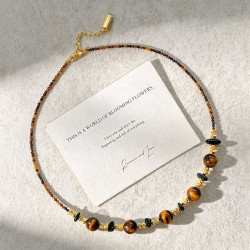


You May Also Like
All Articles →
This content is copyrighted by its original authors. In case of any infringement, please contact us for removal.
Comments
Write a comment