The Heart-Opening Class That Made My Chest Tighter: Notes on Anahata
By RedKnotr Editorial - 04/10/2026 - 0 comments
The class was called "Heart Opening." Ninety minutes of backbends, the instructor said, to unlock the anahata. Forty minutes in, in a cobra pose I'd held a hundred times, my chest did the opposite of opening — it locked like a door with someone behind it. My eyes went hot. I finished the class lying on my mat, staring at the ceiling, furious at my own sternum.
That night I did what I imagine many people do: I stood in front of the mirror and repeated "I am open to love" until it sounded like a stranger reading a parking ticket. Nothing. Worse than nothing — the chest got tighter, as if it had heard me trying to pick its lock.
Why "just open your heart" didn't work
It took me an embarrassing amount of time to understand the failure, and the understanding arrived from an unexpected quarter: a teacher who said, offhandedly, that a closed heart is not a malfunction. It's a decision the body made, once, for excellent reasons. The chest that locks in backbends is the same intelligence that got a younger me through something. You don't pick that lock. You knock, and you wait, and you keep showing up until the lock recognizes your footsteps.
The map I finally read slowly: seven centers, one bridge
So I went back to the framework and read it the way I should have the first time — not as a ladder to climb but as a needs map. Seven centers, read from the ground up: safety, emotion, will, love, expression, insight, connection. A balanced system isn't seven open gates; it's a flow you keep returning to, the way you keep returning to a garden.
The heart center — anahata, in this tradition — sits mid-chest and does a particular job: it is the bridge between the lower three centers, which handle the business of being an embodied self, and the upper three, which handle expression, insight, and connection. Element: air. Color: green. Seed sound: YAM. Its shadow, in the texts I trust, is unprocessed grief — not only grief for the dead, but the accumulated weight of every time love came with conditions attached.
Both directions of imbalance
What the map taught me next reframed everything: imbalance runs both ways. A deficient heart center shows up as armored distance — intellectualizing feelings, keeping people at a polite temperature, a chest that literally rounds and collapses. An excessive one shows up as the opposite leak — over-giving, codependency, love that can't tell where I end and you begin. I had been so sure I was the closed type. The ledger said I was both, on alternating Tuesdays. Many people find they are, and that's not hypocrisy; it's a bridge taking traffic from both sides.
The small practices that actually helped
Practice one: hand on sternum, exhale longer than inhale
Every morning, two minutes, before the phone. Left hand flat on the breastbone. Breathe in for four, out for six. Nothing to fix, nowhere to push — just attention, plus a longer exhale, which is the body's own signal that the coast is clear. The first week I mostly noticed armor. By the third week I noticed something underneath the armor, moving. That was all. That was enough to keep going.
Practice two: supported fish pose, no heroics
I swapped the aggressive backbends for the restorative version: a yoga block under the upper back, lying back over it for three to five minutes, arms open. The difference between this and the class that broke me is the word supported. The nervous system learns something it can use — it is safe to be exposed here — which is information force never delivers. If emotion rises, that's data, not failure. Some days I last ninety seconds. Fine.
Practice three: humming YAM until the chest buzzes
Once a day, usually in the shower where nobody can hear me: twelve slow hums of "YAM" — rhymes with yum. The vibration sits exactly in the center of the chest, and humming on a long exhale does two jobs at once: sound as symbol, and breath as sedative. I can't prove anything about seed syllables. I can report that my chest learns the difference between holding and humming, and prefers one of them.
Practice four: one boundary a week
The practice that changed my relationships: one honest sentence a week, shaped like "I care about you, and I can't fix this for you." I say it out loud where possible, then put my hand on my chest and watch what happens. The first times: contraction, guilt, the whole board meeting. Later, sometimes: a release, an actual softening behind the sternum. An open heart, it turns out, is not a permeable one. Boundaries aren't walls; they're containers that let love stay clean.
A friend gave me a rose quartz pendant during this stretch — a gentle green-and-pink season of my life, and I later found its sibling on RedKnotr for daily wear. I don't charge the stone with miracles. It sits where my practice sits, and when my hand finds it mid-conversation, it asks me the only question that matters: armored, or breathing?
What I'd tell the person crying in that class
I went back to the heart-opening class last week. Same room, same sequence, different arrangement inside. The chest still speaks first — it always will. But I stopped fighting my own sternum, and it stopped treating me as an intruder. I lay in supported fish at the end, eyes wet again, and this time the tears felt like weather, not war.
Questions I get about heart work
Do I have to believe in chakras for any of this to matter?
In my experience, no. Strip the Sanskrit and you still have: longer exhales, supported backbends, honest boundaries, humming — four things with observable effects on a tense chest. The map is old; the body is current. Use whatever vocabulary lets you actually practice.
What if I cry every time I do heart practices?
I did, for a while. Tears in this territory usually mean something stored is finally getting witnessed, and in this tradition that's considered movement, not collapse. Let them come without building a story around them. If the crying feels Bottomless rather than relieving, or connects to grief you already know is heavy, bring in a counselor — I'm not a doctor, and this isn't medical advice.
How long before the tightness eases?
Mine loosened in patches over about two months, with a relapse every time life handed me a reason to re-armor. It's not a course with a certificate. Some days it still doesn't work, and I've stopped counting that against myself.
Can you overdo heart-opening?
Yes — that was my original sin. Forcing open what protects you just teaches it to protect harder, and the texts warn that excess has its own flavor of imbalance: no boundaries, giving past empty. Gentle, supported, frequent, and paired with boundaries beats intense, once, with bravado. Every time.
Tags: heart chakra, anahata, chakra energy, chest tightness
Related Pieces
View All →


You May Also Like
All Articles →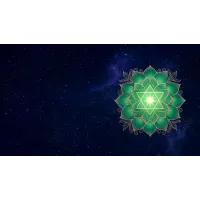


This content is copyrighted by its original authors. In case of any infringement, please contact us for removal.
Comments
Write a comment