Seven Centres, Seven Senses: A Chakra Map You Can Test With Your Eyes Closed (November 2026)
By RedKnotr Editorial - 03/11/2026 - 0 comments
Most chakra charts list the same columns: a colour, an element, a location, a set of qualities. One column gets skipped almost every time, and it may be the most usable one: the sense column. The older tantric model assigned each of the seven centres a mode of perception - smell, taste, sight, touch, hearing, inner seeing, and finally silence. Whatever one believes about energy centres, the map gives a week of very concrete experiments.
The Old Map Had a Sense Column
In the classical Tantric Hindu model popularised through Western yoga, each centre (or chakra) pairs with a sense organ: the root with smell, the sacral with taste, the solar plexus with sight, the heart with touch, the throat with hearing. The two upper centres move beyond the physical senses - the third eye is linked with inner seeing and intuition, the crown with silence or transcendence. Scholars such as Georg Feuerstein and David Gordon White have pointed out that the popular Western version is a simplified form of a larger, living tradition. That honesty does not weaken the practice; it just sets the claim correctly. This is a body-based framework for attention, not a fixed ancient science - and practitioners suggest testing it rather than believing it.
Smell, Taste, Sight: The Lower Three
Root (Muladhara) and smell
The root centre is associated with safety, stability and simply being at home in the body - and smell is the most primal sense we have, wired almost directly into memory and threat appraisal. The traditional logic is easy to feel: a familiar smell grounds you faster than an argument does. The practice takes thirty seconds: choose one morning smell anchor for the week - coffee, cedar, the rain on the pavement - and give it one slow, deliberate breath of attention before the day starts.
Sacral (Svadhisthana) and taste
The sacral centre governs feeling, appetite and creative flow, and taste is its sense: pleasure received slowly, without guilt. Many people find the practice surprisingly hard. Eat or drink one thing today with full attention - no screen, no reading - and notice how long the actual sensation of tasting usually lasts. For most of us, the answer is about three seconds of a ten-minute meal.
Solar plexus (Manipura) and sight
The solar plexus is linked with will, direction and confidence; its sense is sight. Tradition holds that what the eyes organise, the will follows. Two small practices: clear one visual field completely - a desk, a shelf, the kitchen counter - and once a day look at something far away, a horizon or the end of the street, until the shoulders drop. Sight pointed outward and far is the centre's quiet reset.
Touch and Hearing: The Middle Two
Heart (Anahata) and touch
The heart centre bridges giving and receiving, and its sense is touch - the one sense that cannot work at a distance. The practice is twenty seconds of deliberate contact: a hug that lasts longer than usual, warm water held over the hands, a stone turned over in the pocket. Practitioners note that receiving touch counts too; the centre's exercise is letting it arrive, not only offering it.
Throat (Vishuddha) and hearing
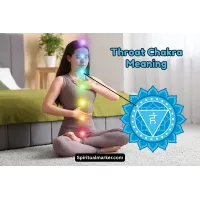
The throat centre governs expression and truth, and its sense is hearing - which is the map's quiet joke and its deepest lesson: expression begins with listening. One minute today, listen to a person without preparing your reply. Not silently waiting to talk; actually listening. Many people find this the single most revealing exercise in the whole rotation.
Inner Sight and Silence: The Upper Two
The third eye (Ajna) is associated with insight, pattern and inner pictures. Its practice is sixty seconds with eyes closed, watching what the mind shows - images, fragments, a colour - without steering. The crown (Sahasrara) belongs to no physical sense at all; its mode is silence, and its practice is two minutes of no input: no music, no podcast, no scrolling, just the plain sound of a room. In the bija-mantra tradition the crown's seed sound is silence itself, and even a sceptical reader can notice what two minutes of nothing does to the nervous system's volume knob.
A Sense-Week Rotation
Run one sense per day for a week, then decide what the map did and did not show you:
- Monday - smell: one deliberate breath of a chosen anchor.
- Tuesday - taste: one item eaten or drunk with full attention.
- Wednesday - sight: one cleared visual field, one far look.
- Thursday - touch: twenty seconds of contact, given or received.
- Friday - hearing: one minute of listening without a reply loaded.
- Saturday - inner sight: sixty seconds of eyes-closed watching.
- Sunday - silence: two minutes of no input at all.
Stones make good anchors for the week - a red stone by the bed for Monday, a green one in the pocket for Thursday - tradition holds that a tactile object helps a daily cue survive contact with real mornings. If you want a stone chosen for exactly this kind of daily use, the pieces at redknotr.com are organised around it.
Frequently Asked Questions
Is the sense map literal?
Tradition holds the correspondences; anatomy does not confirm them. Treat the map as a body-based mnemonic - a way of giving each centre a doorway you can actually walk through - and it does useful work without needing to be literal.
Which day should I start with?
The sense you already trust least. Most people discover that one or two senses are nearly switched off by habit - smell and hearing are the common ones - and those are where the week pays best.
Do I need to sit cross-legged for any of this?
No. Every practice above happens inside ordinary life: a commute, a meal, a hallway. That is the design; the map works through the senses you are already using.
Is this the original tantric system?
No - it is a simplified and adapted version, as scholars of the tradition have documented. Used as a practice framework rather than a historical claim, it remains a coherent and honest way to work with the seven-centre model.
Tags: seven chakras, chakra senses, energy centers, chakra practice
Related Pieces
View All →


You May Also Like
All Articles →

This content is copyrighted by its original authors. In case of any infringement, please contact us for removal.
Comments
Write a comment